More About This Card
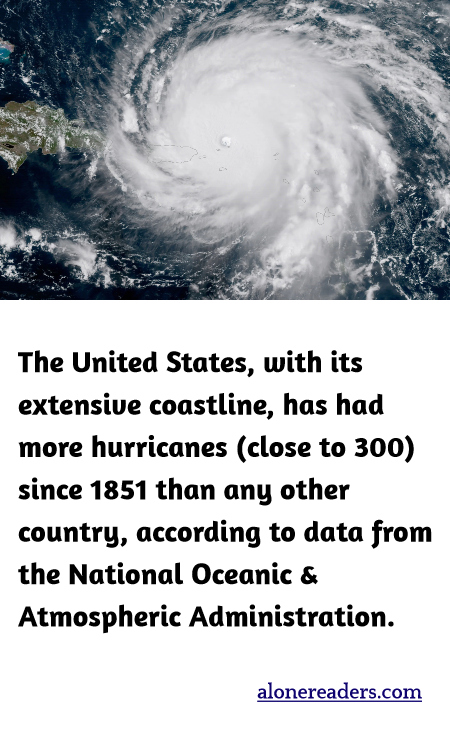
The United States has been significantly impacted by hurricanes over the years, having experienced close to 300 such storms since 1851. This statistic positions the U.S. as the country most affected by hurricanes globally, reflecting not only its geographical vastness but also its expansive coastlines which are particularly vulnerable to such natural disasters. The data sourced from the National Oceanic & Atmospheric Administration (NOAA) underscores the recurrent challenge that hurricanes pose to the country, affecting both its environment and communities.
Hurricanes, powerful tropical storms characterized by heavy rain and strong winds, typically form over warm ocean waters and can cause immense devastation when they make landfall. The U.S. states most frequently hit by these severe weather events include Florida, Texas, Louisiana, and North Carolina, all of which have coastlines along the Gulf of Mexico or the Atlantic Ocean. These regions often face the brunt of the storms, experiencing not only immediate damages such as flooding and building destruction but also long-term socioeconomic setbacks.
The historical record of hurricanes in the U.S. includes notable storms like Hurricane Katrina in 2005, which notably affected Louisiana and was one of the most devastating in the country’s history, and more recent hurricanes like Harvey and Irma, which hit Texas and Florida, respectively, in 2017. The economic impact of these storms can be staggering, often running into billions of dollars in recovery and reconstruction efforts. Besides economic damage, hurricanes also pose significant environmental and health threats, including water contamination, loss of wildlife habitats, and the spread of waterborne diseases.
In response to the frequent and often devastating impact of hurricanes, the U.S. has developed comprehensive disaster preparedness and response strategies. These include better forecasting techniques, improved evacuation plans, and more stringent building codes designed to withstand hurricane impacts. Local, state, and federal agencies work collaboratively to enhance resilience against future hurricanes, focusing on reducing the time and cost of recovery.
Understanding the patterns and frequencies of hurricanes is crucial for planning and preparedness. NOAA continues to play a pivotal role in researching and providing authoritative data on hurricanes, helping to safeguard lives and properties through advanced warning systems and public education on safety measures. As climate change continues to influence weather patterns globally, the role of such organizations becomes even more critical in mitigating the impacts of increasingly severe weather events. The historical data on hurricanes not only highlights past challenges but also helps pave the way for future solutions to enhance resilience in the face of natural disasters.