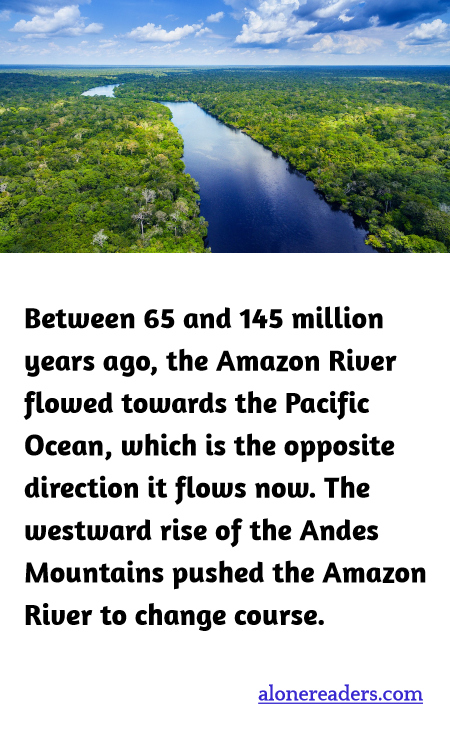
The Amazon River, one of the world's most voluminous and powerful rivers, was not always as we know it today. Stretching over 4,000 miles across South America, it discharges into the Atlantic Ocean, but this was not always the case. Between 65 and 145 million years ago, during the Mesozoic era, it actually flowed in the opposite direction, towards the Pacific Ocean. This ancient configuration of the Amazon was dramatically altered by a colossal geological event—the rise of the Andes Mountains.
The uplift of the Andes, which began around the same time, was a pivotal factor in the reversal of the Amazon's flow. As tectonic forces pushed the land upwards, eventually forming what we now recognize as one of the world’s longest and most formidable mountain ranges, they reshaped the landscape through which the Amazon River flowed. Prior to the uplift, the river's drainage basin would have been directed westward, making the pathway to the Pacific the most logistically feasible route for the river's waters. However, as the Andes rose, they acted as a natural dam, blocking the river's path west and forcing it to find an alternative route.
This monumental shift didn't occur overnight. It was a gradual process influenced by additional geological activities, including volcanic eruptions and movements of the Earth's crust, which further helped in sculpting the river's new path. Over millions of years, these processes redirected the Amazon towards the east, carving a new path through the newly formed landscape. The river began to flow eastward, cutting through the continental bedrock to create what has now become its basin in northern South America.
In its journey east, the Amazon also began to gather waters from numerous tributaries, which fed from the expansive, newly formed Amazon Rainforest. This collection of water systems solidified the Amazon’s role as a major watercourse capable of supporting an incredible diversity of life. Today, the Amazon River is integral not only to South America's geographical and ecological framework but also plays a crucial role in global climate regulation and biodiversity.
Understanding the history of the Amazon River's formation and its dramatic directional change offers valuable insights into the geological and climatic evolution of South America. It underscores the dynamic nature of our planet’s geological structures and their lasting impact on the natural world. The reversal of the Amazon’s flow, triggered by the rise of the Andes, stands as a profound testament to the transformative power of Earth’s geological forces.
