More About This Card
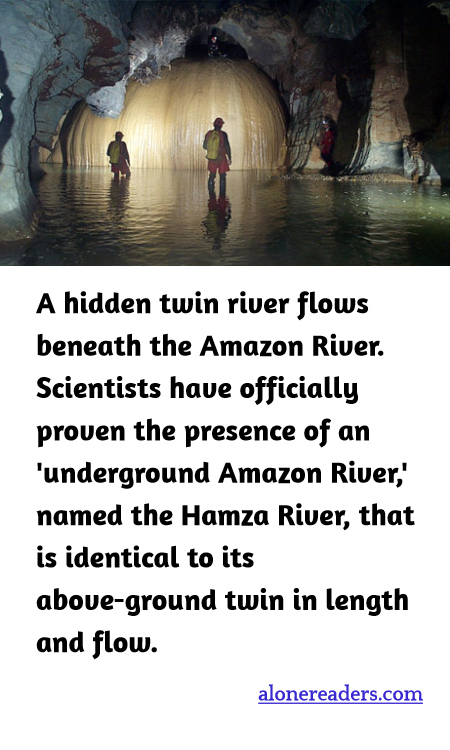
Deep beneath the lush forests and winding path of the Amazon River, a remarkable geological twin mirrors its flow, unseen to the naked eye. This hidden counterpart, named the Hamza River after Valiya Hamza, the scientist who led the research team that discovered it, stretches approximately the same length as the Amazon itself. Unlike the world-renowned river that sweeps dramatically across South America, the Hamza River creeps stealthily beneath the surface, etching its subtle course deep within the Earth’s crust.
The discovery of the Hamza River is a breakthrough in understanding the complex hydrological systems of the Amazon Basin. This subterranean river is not a river in the conventional sense. Instead of swiftly flowing waters, it involves the slow movement of groundwater through the porous layers of sedimentary rock beneath the Amazon River. Its flow rates are much slower, and the waters take their time, navigating a vast network of geological formations over a horizontal span comparable to that of its surface sibling, spanning thousands of kilometers from the Andes Mountains to the Atlantic Ocean.
The presence of such an underground system challenges previous conceptions about the water cycle in the Amazon and reveals critical insights into the region's ecological balance. It raises significant questions about the interconnectivity of surface and subsurface hydrology and how disturbances in one might affect the other. For instance, the extraction of resources like oil or minerals may have far-reaching impacts that could extend beyond the surface ecosystems and potentially disrupt the flow or quality of water in this underground system.
Moreover, the Hamza's existence could also contribute to explaining the unusually high biodiversity of the Amazon rainforest, offering a unique underground refuge for various aquatic lifeforms during extreme climate events or droughts that reduce the flow of the surface river.
With this new finding, scientists urge a reconsideration of environmental policies and conservation strategies. The interconnected nature of the Amazon’s waterways implies a need for a holistic approach to managing this irreplaceable ecosystem. Protecting the Amazon thus not only involves safeguarding the visible parts of this vast ecological network but also the hidden aspects, ensuring the health and vitality of the region for future generations.
By shedding light on these subterranean hydrological processes, the identification of the Hamza River deepens our appreciation for the Amazon’s complexity and serves as a poignant reminder of the myriad mysteries that our planet still holds, tucked away beneath the surfaces waiting to be explored.