More About This Card
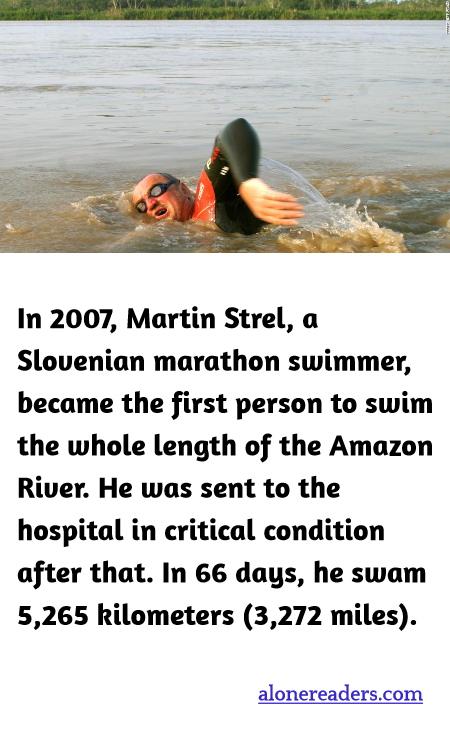
In 2007, Martin Strel accomplished an extraordinary feat that vaulted him into the annals of extreme sports history. As a seasoned Slovenian marathon swimmer, Strel undertook a daunting challenge to swim the entire length of the Amazon River, one of the most perilous waterways in the world. Spanning 5,265 kilometers (approximately 3,272 miles), his journey stretched from the Peruvian Andes through Brazil to the Atlantic Ocean, a voyage that took 66 grueling days to complete.
The Amazon is notorious for its treacherous conditions, including dangerous wildlife such as piranhas, anacondas, and crocodiles, as well as unpredictable currents and weather patterns. Despite these hazards, Strel persisted, propelled by a potent mix of endurance, determination, and a desire to raise awareness about water pollution. Each day, he swam an average of 80 kilometers, facing exhaustion, illness, and the relentless threats posed by the river's inhabitants.
Strel's swim was not just a test of physical stamina but also a profound demonstration of human willpower. His efforts highlighted the critical importance of preserving the world's waterways, drawing global attention to environmental conservation. However, the monumental strain of this Herculean task took a severe toll on his health. Upon completing the swim, he was immediately hospitalized in critical condition, suffering from numerous ailments brought about by prolonged exposure to such harsh conditions.
Martin Strel's journey along the Amazon River stands as a testament to the extraordinary capabilities of individuals to overcome nearly insurmountable challenges. It also serves as a pivotal reminder of the fragility of our natural ecosystems and the need for ongoing efforts to protect and preserve them for future generations.