More About This Card
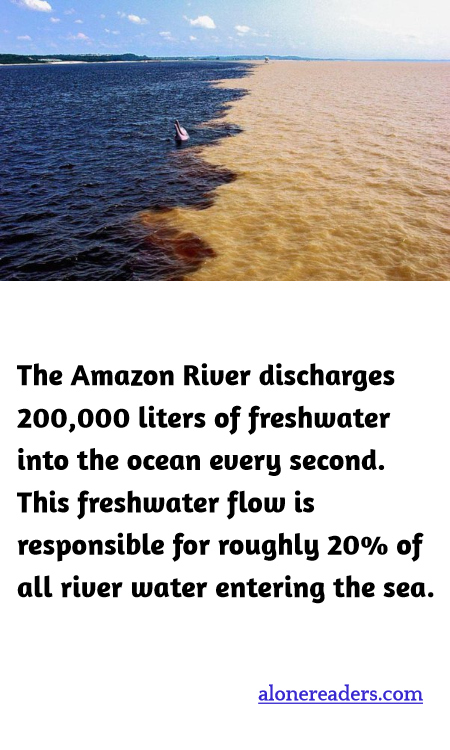
The Amazon River, one of the most formidable natural wonders on the planet, has an extraordinary impact on the environment both locally and globally. Every second, it discharges about 200,000 liters of freshwater into the Atlantic Ocean, totaling an astonishing 5.3 trillion liters per day. Such a voluminous discharge is not just noteworthy for its magnitude but also for its environmental and ecological implications, contributing approximately 20% of all river water entering the world's oceans.
This massive influx of freshwater plays a crucial role in the regulation of the water salinity and the temperature of the ocean in the surrounding areas. The fresh water mixes with the saltwater, creating unique brackish ecosystems that harbor a wide variety of marine life. These environments are often nutrient-rich and serve as breeding grounds for various species of fish, crustaceans, and other marine organisms, supporting both local fisheries and the global food supply.
Moreover, the Amazon acts as a critical conveyor of sediments, nutrients, and organic material from inland to the ocean. These materials are essential for the health and productivity of marine ecosystems. The nutrients, particularly phosphorus and nitrogen, act as fertilizers for marine plants like phytoplankton, which form the basis of the aquatic food chain. An increase in phytoplankton can boost the populations of small fish and shrimp, ultimately benefiting larger predators including humans.
The sheer scale of freshwater discharge also affects global ocean currents and climate patterns. The Atlantic meridional overturning circulation, for example, which helps regulate the planet’s climate, is influenced by the freshwater input from rivers like the Amazon. Such circulation patterns have a profound impact on weather systems, potentially affecting rainfall and storm patterns not just in South America, but across the planet.
Finally, the role of the Amazon’s discharge in carbon cycling cannot be understated. As the river water carries dissolved CO2 from decomposed organic material into the ocean, it helps regulate atmospheric CO2 levels, thereby modulating global temperatures and combating climate change.
In conclusion, the Amazon River's massive discharge of water into the ocean is a pivotal natural process with far-reaching impacts. This dynamic system not only supports marine life through the creation of unique ecosystems but also plays a significant role in global climate regulation and the carbon cycle, underscoring the interconnectedness of Earth's environmental systems.