More About This Card
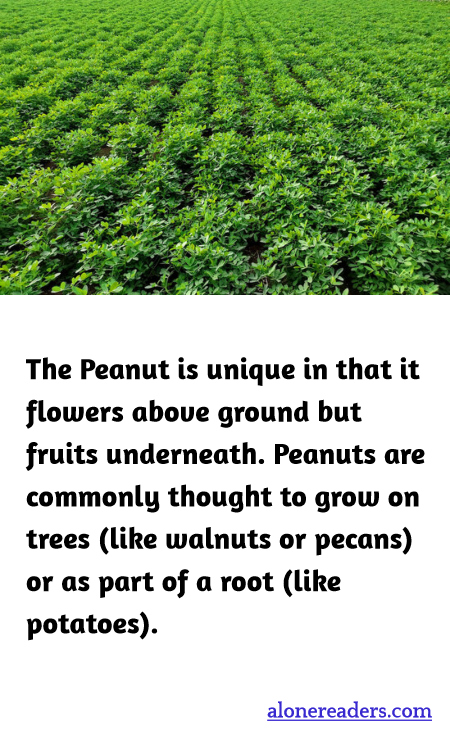
Peanuts, also known as groundnuts, are a fascinating crop due to their unique growth process. While many believe that peanuts are grown on trees like walnuts or pecans, or underground like potatoes, they actually belong to a distinct category. Peanuts are legumes, which places them in the same family as beans and lentils. What sets them apart from other crops is their unusual reproductive process, which involves flowering above ground and fruiting below.
The peanut plant begins its life cycle as a small shrub, reaching about 18 inches in height, and primarily grows in warm climates with well-draining soil. The plant produces yellow flowers along the lower part of its stem. After pollination, these flowers fade and the stalk at the base of the flower, known as the "peg," starts to grow downwards, extending into the soil. This growth habit is called geocarpy, a rare phenomenon where the fertilized ovary is pushed underground to mature.
Once the peg burrows into the soil, the tip swells and develops into a peanut. The shell and seeds we recognize as peanuts form in this protective underground environment. This intriguing adaptation may have evolved as a way to protect the seeds from predation and to take advantage of the moist, nutrient-rich soil conditions below the surface.
Peanuts are harvested mainly by pulling the entire plant out of the soil, which reveals the peanuts clinging to the roots. This part of the process is highly mechanized in large-scale farming, with specialized equipment that lifts the plants and shakes off the excess soil, leaving the peanuts ready for collection and further processing.
The growth and development of peanuts make them an agricultural curiosity, showing just how diverse plant reproductive and survival strategies can be. Besides being a fascinating botanical specimen, peanuts are also a valuable agricultural product used globally in a variety of culinary applications, from peanut butter to snack foods and as a source of cooking oil. Their high protein content and beneficial fats contribute valuable nutrition, making them a staple in many diets around the world.