More About This Card
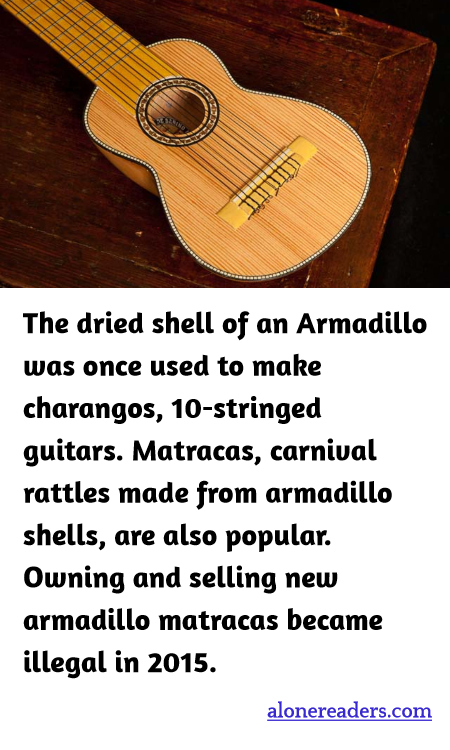
The armadillo, a creature often seen scuttling across the landscapes of the Americas, has not only adapted to its natural habitat but has also been a part of human culture in unexpected ways. Historically, the dried shell of the armadillo has been utilized in the creation of musical instruments, most notably the charango. This unique instrument, originating from the Andean regions of South America, typically features ten strings and is similar in appearance to a small guitar. The body of traditional charangos was originally made using the shell of an armadillo, lending the instrument a distinct, resonant sound that became a staple in local musical compositions.
The use of armadillo shells extends beyond the realm of stringed instruments. Matracas, which are rattling devices commonly used in carnivals throughout Latin America, were also traditionally crafted from these shells. These percussion instruments produce a loud, distinctive sound that is integral to the festive atmosphere of carnivals. However, concerns over the conservation status of armadillos and ethical considerations regarding their use in such items led to significant changes. In 2015, the creation, possession, and sale of new armadillo shell matracas were outlawed, reflecting a growing awareness and sensitivity towards wildlife conservation and biodiversity.
This legislation marked a pivotal shift in how natural resources are utilized in cultural practices. The ban not only protects armadillo populations from potential exploitation but also encourages the innovation of alternative materials in the craft of musical and cultural artifacts. By turning to other resources, artisans and manufacturers can preserve traditional practices while adhering to modern ethical standards. This evolution in material culture exemplifies how traditions can adapt to incorporate sustainability, ensuring that both cultural heritage and wildlife conservation go hand in hand. Thus, while the use of armadillo shells in musical instruments and carnival artifacts is an interesting chapter in the intersection of culture and natural history, the move towards more sustainable practices paves the way for a harmonious balance between human creativity and the preservation of the natural world.