More About This Card
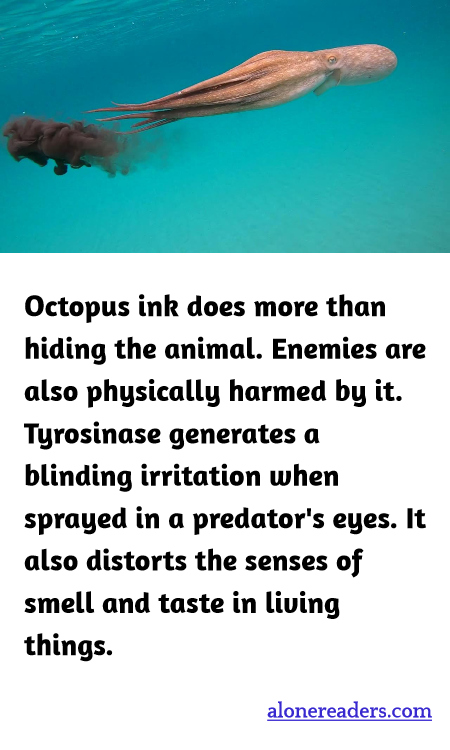
Octopus ink is a fascinating adaptation that serves multiple purposes beyond its primary function as a defense mechanism. While many are aware that octopuses release ink to create a smokescreen that allows them to escape from predators, fewer may know about the ink’s additional, more aggressive defensive capabilities.
The ink of an octopus is not simply a visual deterrent. It contains a substance called tyrosinase, which plays a crucial role in the effectiveness of the ink beyond creating a visual smokescreen. When this ink is sprayed into the eyes of a predator, the tyrosinase causes a severe, blinding irritation. This is not just a temporary visual impairment; the sensation can be intensely painful and disorienting, providing the octopus with a greater chance to flee.
Moreover, the ink impacts more than just the visual senses of its predators. It also affects the olfactory and gustatory senses, which are crucial for predators who rely on their sense of smell and taste to locate and identify food. By distorting these senses, octopus ink further confuses and repels potential threats. This multifaceted sensory assault makes it an extraordinarily effective tool in the octopus's survival strategy.
The chemical properties of octopus ink have even piqued the interest of researchers, who are studying its potential applications in various fields. The unique characteristics of tyrosinase, for example, are being explored for uses in cosmetics and pharmaceuticals. This enzyme's ability to cause rapid darkening could have implications for treatments involving pigment production in skin.
In the wild, the adaptability and ingenuity of octopuses are mirrored in the complexity of their ink. Each squirt of ink is a sophisticated concoction tailored not just to confuse, but also to harm and deter any threats, allowing these remarkable creatures to thrive in diverse and often hostile environments. The study and understanding of octopus ink not only highlight the sophistication of these cephalopods but also open potential avenues for biotechnological applications inspired by one of nature's most ingenious defenses.