More About This Card
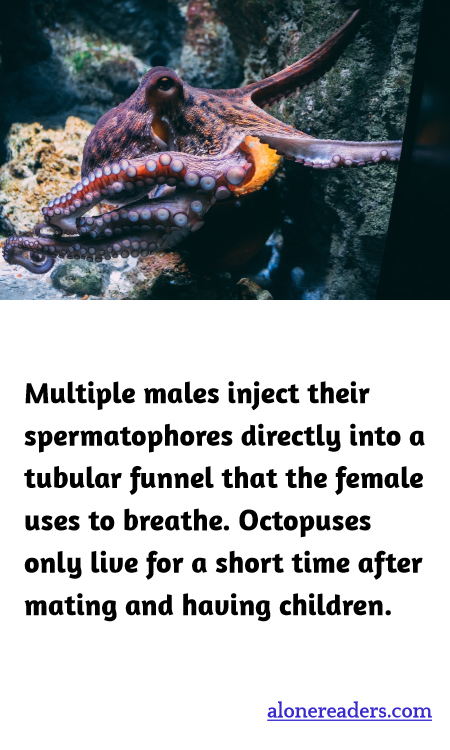
Octopuses are fascinating creatures, not only because of their physical adaptability and intelligence but also due to their unique reproductive behaviors. Mating for octopuses is a precarious venture, often culminating in the ultimate sacrifice. Unlike many creatures where constant involvement in the upbringing of the young is common, the life cycle and reproductive strategy of octopuses cast a different, somewhat somber story, heavily marked by solitude.
The mating process begins uniquely as multiple males may compete to inject their spermatophores, or sperm packets, into a specific part of the female anatomy. Instead of the usual fertiziliation approach seen in other marine creatures, male octopuses use their hectocotylus, a specialized arm, to deposit spermatophores directly into the female’s mantle cavity. This cavity is a critical component of her anatomy as it houses not only vital organs but also a tubular funnel known as the siphon, which is used for breathing.
The immediate aftermath of this peculiar form of mating leads onto another interesting aspect of the octopus' life cycle—their brief post-reproductive lifespan. Once the mating process is completed, the biological clock of an octopus winds down rapidly. Females, after laying eggs, oversaw them devotedly and never leave their nest. They take the job of cleaning the eggs and aerating them with fresh water currents until the eggs hatch. Throughout this period, the female does not eat and slowly begins to degrade physically until it results in death shortly after the young are born.
On the other hand, males also meet an almost immediate demise post-mating. It is theorized that this pattern may be attributed to a mechanism encoded within their biological systems, wherein their very anatomy and physiology are programmed to break down post-reproduction. This seemingly tragic end, however, serves a natural role in the ecological balance, limiting competition for the scarce resources required by the next generation to thrive.
The octopus illustrates a striking view of reproductive strategy and lifecycle, which while being adaptive and successful on one hand, poses significant sacrifices by these creatures. Each reproductive cycle ensures the survival of the species but at a great personal loss to each participating individual. This exclusive isolated focus on the future of their progeny, riddled with personal health decline and certain demise, is one of nature's profound, yet heartbreaking phenomena.