More About This Card
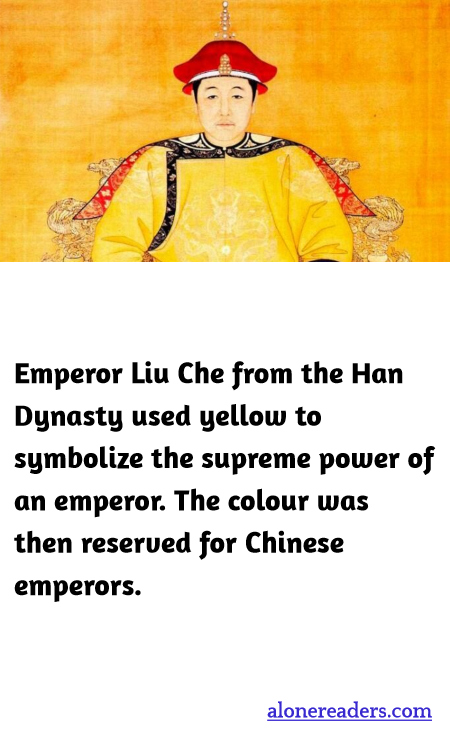
Yellow, historically the color of royalty and divine authority, has woven its significance thoroughly through the fabric of Chinese culture, particularly during the rule of Emperor Liu Che of the Han Dynasty. Known posthumously as Emperor Wu, Liu Che is one of the most celebrated emperors in Chinese history, renowned for his expansionist ideology and profound influence on the consolidation of imperial power. His reign, spanning from 141 to 87 BC, marked a pivotal era during which the yellow color came to symbolize the ultimate authority and supremacy of the emperor.
During Emperor Wu's time, yellow was not just a random choice; it was deeply imbued with philosophical and cosmic significance. In traditional Chinese symbolism, yellow is the color of the earth in the Five Elements theory, which also includes wood, fire, water, and metal, each associated with a different color. The earth element was central, representing stability and balance, qualities essential to a ruler. By adopting yellow as the imperial color, Emperor Liu Che was asserting his role as the earthly equivalent of the center of the universe, underpinning his divine right to rule and the centrality of his authority.
As a result, yellow became strictly reserved for the emperor and his direct surroundings. It colored the tiles of imperial roofs and dyed the robes worn by the emperor. The exclusivity of yellow extended to all aspects of life in the imperial palace. It manifested not only in attire but also in the architectural details of palatial buildings which bore yellow as a dominant scheme, specifically the Forbidden City, which later emperors continued to adorn with yellow-glazed roof tiles, signifying the sacred and inviolable nature of the emperor's abode.
Furthermore, this tradition of yellow as an imperial privilege continued and was strictly enforced throughout successive dynasties, cementing its role in the cultural and political fabric of Imperial China. Ordinary people were forbidden from wearing yellow under pain of severe penalty, a regulation that underscored the color's sacredness and the separation between the emperor and his subjects.
This vivid hue, therefore, became a powerful tool of imperial policy, visually communicating the singular nature of the emperor’s power and his unique position in the cosmos as well as within the societal hierarchy. The color yellow, as used by Emperor Liu Che and his successors, stands as a vivid emblem of the awe-inspiring and solitary majesty of the empire, a tradition with lasting impacts on the cultural heritage of China.