More About This Card
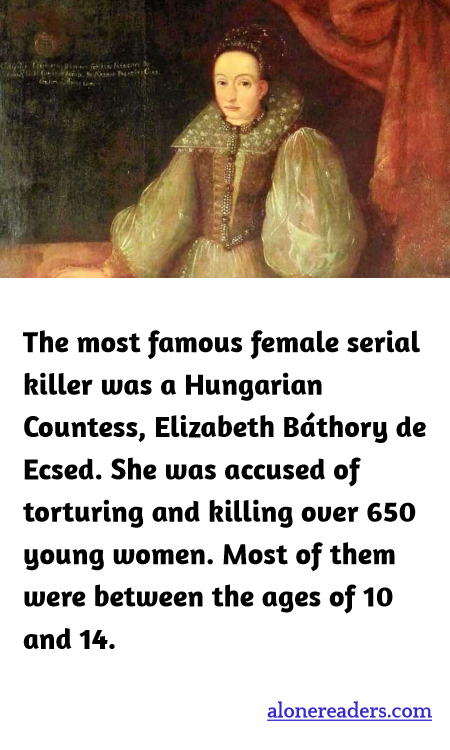
Elizabeth Báthory, often labeled as one of the most ruthless serial killers in history, was a Hungarian noblewoman born in 1560 into one of the most prominent families of the time. Her case is notorious not just for the gruesome nature of her alleged crimes, but also for the high social status she held. Báthory's story is deeply entwined with legends and myths, often overshadowing the harsh realities of her exploits.
According to historical records and testimonies gathered in the early 17th century, Countess Báthory was accused of committing horrifying tortures and murders of numerous young women, with victims reportedly numbering over 650, although this figure remains subject to debate among historians. The majority of her supposed victims were girls aged between 10 and 14, purportedly drawn from local peasant families as well as from gentry families who sent their daughters to Báthory under the guise of receiving education and courtly training.
The gruesome tales recount that she bathed in the blood of virgins to maintain her youthful appearance, a story which has contributed to her legacy as the 'Blood Countess'. Despite the spectral quality of such tales, they have cemented her image in popular culture, casting her as a precursor to vampire legends. However, it is important to note that much of these narratives were circulated by her contemporaries and later observers who may have had ulterior motives, either due to political aspirations or the desire to claim her vast estates.
Báthory's downfall began in 1610 when King Matthias II ordered an investigation due to the alarming rumors circulating about her brutal behavior. In December 1610, she was arrested and subsequently tried not for murder, but for lesser charges primarily focusing on the deaths of daughters of the nobility. Due to her noble status, she wasn't given a death sentence but was confined to her castle in Cachtice, where she remained under house arrest in solitary confinement until her death in 1614.
The trial and further documentation have led scholars to consider various interpretations of her actions and her subsequent punishment. Some view her as a victim of a conspiracy, arguing that the trial was politically motivated to enable her influential relatives to appropriate her lands. Others suggest that the evidence of her torture and murder is overwhelming and reflects the extreme abuse of power.
Elizabeth Báthory's life and the horrific tales associated with her name linger as a chilling narrative that intertwines gender, power, and violence, making her one of the most enigmatic figures in European history. Even centuries after her death, the blend of myth and reality surrounding her actions continues to fascinate and horrify the world.