More About This Card
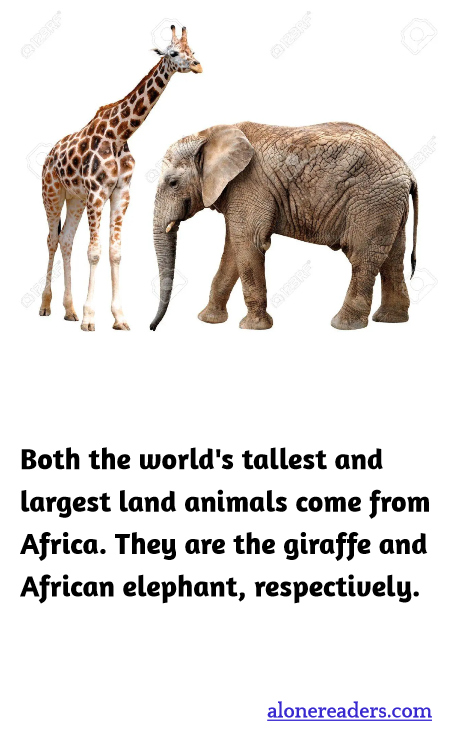
Africa is renowned for its diverse ecosystem and myriad of breathtaking wildlife, among which the giraffe and the African elephant stand out due to their impressive sizes and heights. These two creatures not only draw significant attention in the wild but also play crucial roles in their respective habitats.
The giraffe, holding the title for the world's tallest land animal, can reach heights of up to 18 feet (about 5.5 meters). This extraordinary height, crowned with a long neck and legs, gives the giraffe a distinct advantage in the savannas and woodlands where it resides. It allows these creatures to feed on leaves from tall trees that other herbivores cannot reach, specifically favoring the acacia tree. This unique feeding behavior is vital as it makes the giraffe a key species in their environment by promoting growth among the higher canopies and aiding in seed dispersal.
Distinctively, the giraffe's height plays a crucial role in its social interactions and survival strategies. The height advantage allows giraffes to keep a watch on predators from afar, which is vital for their survival. Moreover, their long necks are not just for feeding but are also used in a behavior known as "necking" where male giraffes swing their necks to strike opponents during mating rights battles.
The African elephant, on the other hand, is the world's largest land animal, with some male elephants weighing up to 12,000 pounds (about 5,443 kilograms) and reaching up to 10 feet (about 3 meters) at the shoulder. Unlike their distant Asian cousins, African elephants have larger ears and more wrinkled skin, which help them regulate their body temperature in the harsh African climate. They possess strong, versatile trunks and large tusks, which serve various purposes from foraging for food and water, to interacting with other elephants and defending themselves.
Elephants play an indispensable role in their ecosystem as well. Known as ecosystem engineers, they help to create and maintain the environments they live in. Their strength allows them to uproot trees and trample down vegetation, thereby transforming the landscape, which enables other species to thrive. They also assist in seed dispersal as they consume a wide variety of plants, and the seeds are often deposited far from the original source in the elephants’ dung, which is a rich fertilizer.
Both the giraffe and African elephant not only showcase the biological diversity and uniqueness of African wildlife but also demonstrate the intricate balance of ecosystems. These animals attract tourists from all over the world, contributing significantly to conservation efforts and the economic stability of various African regions. By understanding and appreciating these majestic animals, we take a step further towards ensuring their survival and the health of our global environment.