More About This Card
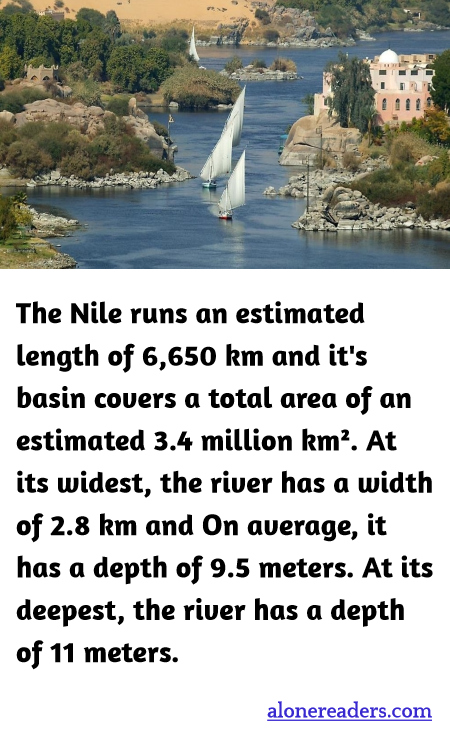
The Nile River, stretching an impressive 6,650 kilometers, stands as one of the longest rivers in the world. Its expansive basin, covering about 3.4 million square kilometers, traverses multiple countries and serves as a critical water and ecological resource for the entire region. The significance of the Nile stretches beyond its sheer size; it's a crucial source of life in a predominantly arid landscape.
The river's width varies along its course, reaching its maximum at 2.8 kilometers, which enables it to support a variety of wildlife and vegetation on its banks. The average depth of the Nile is about 9.5 meters, though it dives down to depths of up to 11 meters at its deepest points. These depths help sustain a rich biodiversity within the river, fostering a range of aquatic life that is adapted to its dynamic flow.
Historically, the Nile has played an essential role in the development of civilizations, particularly in Egypt, where it has been a lifeline since ancient times. The annual flooding of the river brought fertile silt to the banks, making the surrounding land extraordinarily productive for agriculture. This agricultural bounty was a cornerstone of ancient Egyptian civilization, supporting its population and allowing for the development of complex societal structures.
Today, the Nile continues to be an indispensable resource, supporting modern agricultural practices and providing water to millions of people across its course. The management of its waters remains crucial, requiring cooperative international efforts to ensure that its benefits continue to flow in the face of climatic, political, and economic challenges. The sustainability of the Nile River is not just a regional concern but a matter of global importance considering its historical legacy and its critical role in biodiversity conservation.