More About This Card
The United States Flag Code, first established in 1923 and later codified in federal law in 1942 during World War II, sets precise guidelines for the handling, display, and disposal of the American flag. Designed as a directive for those looking to show respect to the flag and what it signifies, these regulations cover a wide range of practices largely adhered to by governmental agencies, certain organizations, and often, the general public.
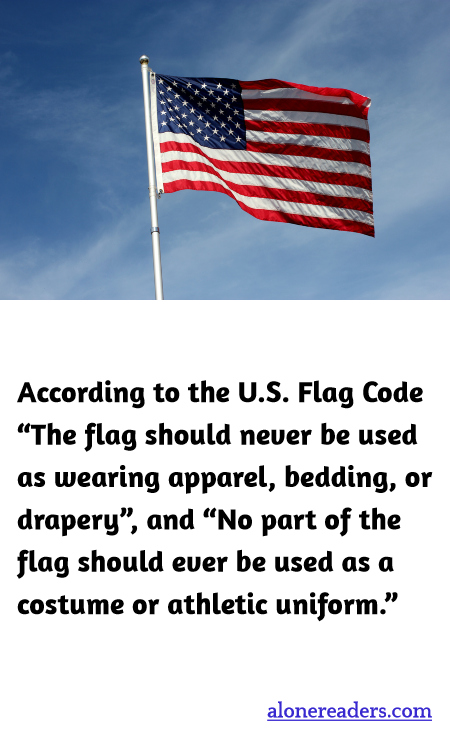
One of the pivotal stipulations of the Flag Code is that the flag should not be appropriated into apparel, bedding, or drapery. This rule aims to prevent the national emblem from being trivialized or degraded in its presentation. The rationale is to maintain the flag’s dignity, ensuring it remains a symbol of national pride and not reduced to a mere decorative item or an everyday piece of fabric. This is also why advertising banners should not be fashioned in the likeness of the flag.
Similarly, the code explicitly states that no part of the flag should be employed as part of a costume or athletic uniform. However, a flag patch may be affixed to the uniform of military personnel, firemen, policemen, and members of patriotic organizations, provided it is worn in a manner that is respectful and compliant with the stipulations of flag etiquette. For instance, the flag patch on such uniforms is typically placed on the sleeve, representing the flag flying as if in the breeze.
Over the years, enforcement of the Flag Code has been chiefly a matter of personal honor, as there are no legal penalties for noncompliance. The interpretative nature of “respect” leads to varying implementations of these guidelines across different states and contexts. For many, wearing flag-themed apparel on national holidays like Independence Day or Memorial Day is a display of patriotism. However, these actions, technically, stand in opposition to the Flag Code’s mandates.
The balance between expressing patriotism through the flag and adhering strictly to the Flag Code continues to be a topic of discussion, especially during times of heightened national sentiment. Understanding and respecting these traditions plays a crucial role in the ongoing discourse on national symbols and their proper use. The U.S. Flag Code, while reflective of a deep respect for the nation’s emblem, also invites a broader conversation about the meanings of respect and patriotism in a continuously evolving society.