More About This Card
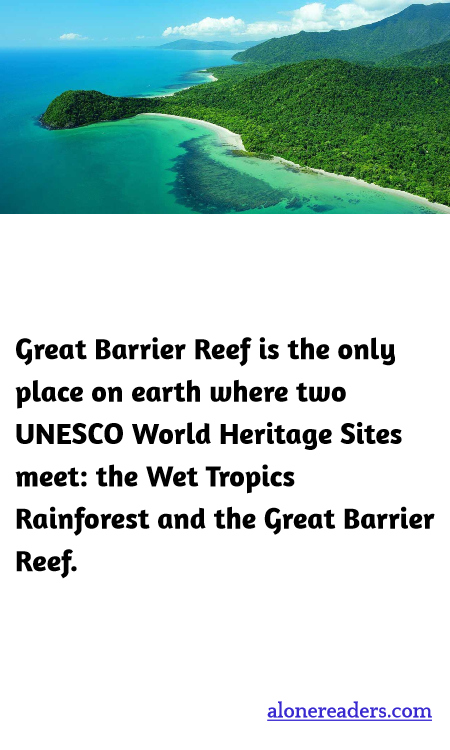
The Great Barrier Reef, located off the coast of Queensland in northeastern Australia, presents a spectacular natural tableau where two UNESCO World Heritage Sites converge: the reef itself and the Wet Tropics Rainforest. This rare confluence of two heritage sites offers a unique showcase of biodiversity and natural beauty, unmatched anywhere else on the planet.
Spanning approximately 2,300 kilometers, the Great Barrier Reef is the world’s largest coral reef system and is visible from space. Composed of over 2,900 individual reefs and 900 islands, it supports a vast array of marine life, including numerous species of colorful fish, mollusks, and starfish, not to mention turtles, dolphins, and sharks. This aquatic wonderland provides not only critical habitats but also serves as an important barometer for oceanic health.
Adjacent to this underwater marvel lies the Wet Tropics Rainforest, which stretches along the northeast coast of Queensland. This lush, dense rainforest covers approximately 894,000 hectares and is home to the oldest continuously surviving tropical forests on Earth. Its incredible biodiversity includes over 400 bird species, 100 mammal species, and 150 different reptiles. Notable residents include the endangered cassowary, a prehistoric bird that plays a crucial role in seed dispersal throughout the forest ecosystem. The biodiversity of the Wet Tropics is remarkable, with many of its plant and animal species found nowhere else in the world.
The proximity of these two distinct ecosystems offers a unique interaction between marine and terrestrial biodiversity. The fringing reefs of the Great Barrier Reef protect the coastline, which in turn supports the coastal and estuarine habitats bordering the Wet Tropics. This interdependency helps to regulate climate, protect biodiversity, and support the local communities through tourism and fishing.
Scientists and ecologists often focus on this area to study the impacts of climate change, observing coral bleaching in the reef and shifts in the populations of the rainforest species. Conservation efforts are crucial in this region to address threats like mining, illegal fishing, deforestation, and the global warming that drives coral bleaching and other ecological shifts.
For travelers and nature enthusiasts, visiting the region where the Great Barrier Reef and Wet Tropics Rainforest meet is an extraordinary experience. It's not only a chance to witness the remarkable diversity of life but also a reminder of the fragile interdependence of Earth’s ecosystems. The collaboration of local governments, indigenous communities, and international agencies in conserving these sites is key to ensuring they continue to thrive for generations to come. This region is a testament to the natural world's ability to inspire wonder and the urgent need to protect such irreplaceable treasures.