More About This Card
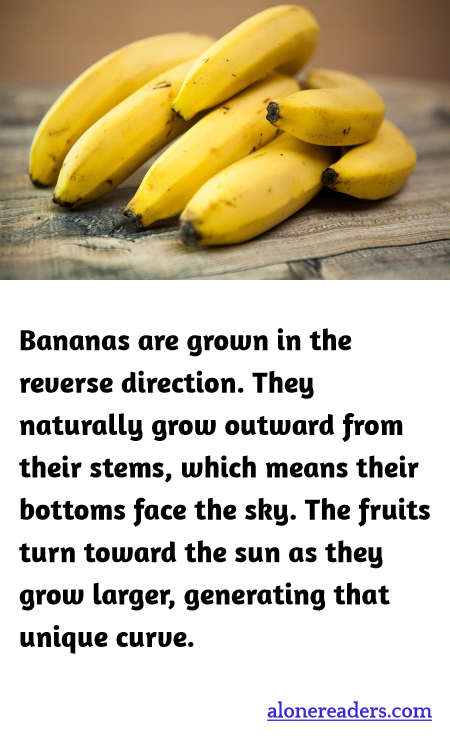
Bananas, those staple fruits synonymous with breakfast tables and gym bags, have a growing pattern that captures attention and piques curiosity. Unlike most fruits, bananas grow in an intriguing manner: they grow in the reverse direction from the way they are commonly pictured. This unique growth pattern starts at the stem, which is actually the bottom part of the fruit. From here, bananas grow upwards and outwards, naturally curving towards the sun.
The phenomenon of growing towards the sun is known as negative geotropism. While roots exhibit positive geotropism by growing towards the earth, bananas do the exact opposite by growing away from the gravitational pull. This distinct characteristic is largely due to the fruit's desire to reach the sunlight, which enhances photosynthesis, aiding in the development and ripening of the banana.
As they mature, bananas undergo a transformation, turning from a starchy, almost inedible state to the soft, sweet fruit we love. This process is driven by the ethylene gas released naturally by the fruit, which not only softens the banana but also alters its color from green to the recognizable yellow. This yellowing phase signals that the sugars within the fruit have developed enough to be enjoyed, although some people prefer the slightly firmer, less sweet green bananas for cooking applications, as seen in many Caribbean and Asian cuisines.
Moreover, the unique curve of bananas isn't just a botanical curiosity but has practical human applications. The curved shape of the banana makes it easier to hold and peel, starting from the stem which, contrary to popular belief, is often easier if handled from the so-called "bottom." This intuitive design ensures that bananas are not only fascinating subjects of natural history but also perfectly crafted for consumption.
In a world where we often take for granted the food on our plates, understanding how bananas grow reminds us of the complex and wonderfully quirky natural processes that nourish our bodies and enrich our diets. This fascinating growth process not only highlights the marvels of plant development but also the beauty of nature's design in catering to both the needs of the species and the consumers—humans and animals alike—that depend on them.