More About This Card
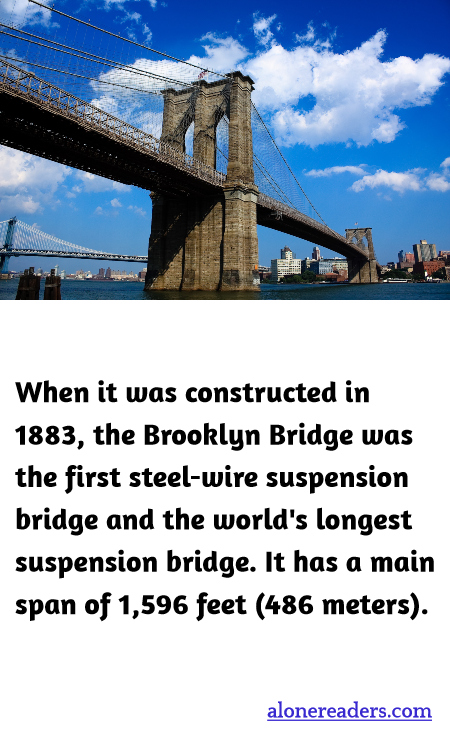
The Brooklyn Bridge, when completed in 1883, was not only a marvel of engineering but also a monumental achievement in the history of construction. As the first steel-wire suspension bridge, it introduced a new era in bridge construction and remains one of the most recognizable and celebrated bridges in the world. Spanning the East River in New York City, it connects the boroughs of Manhattan and Brooklyn, facilitating not just vehicular traffic but also serving pedestrians and cyclists.
The bridge's main span stretches 1,596 feet (486 meters), making it the longest suspension bridge at the time of its completion. The conception and construction of the Brooklyn Bridge were driven by the need for a dependable and efficient route between the then-separate cities of New York and Brooklyn, which were experiencing rapid population growth. The bridge was designed by John A. Roebling, a German immigrant who was a pioneer in the development of steel-wire rope. Tragically, Roebling died from an accident during the early stages of the project, and his son, Washington Roebling, took over as the chief engineer.
Washington faced numerous challenges, including the caisson disease which afflicted many workers, including himself, due to the decompression sickness caused by working in the pressurized compartments used for constructing the bridge’s foundation. Despite these hurdles, the project moved forward, propelled by the determination and innovative techniques developed by the Roeblings. Emily Warren Roebling, Washington's wife, played a critical role in the completion of the bridge by liaising between her husband, who was often bedridden by his illness, and the project's workforce on the ground.
The Brooklyn Bridge was celebrated as an icon of innovation and determination from the day it opened. It not only enhanced New York City's urban landscape but also stood as a symbol of new technological advancements that were accessible and beneficial to the public. Its Gothic Revival stone towers, which anchor the massive steel cables, blend functionality with aesthetic appeal, enhancing the skyline of New York City and serving as a beloved landmark.
Today, the Brooklyn Bridge is not only a vital transportation link but also a historic symbol of ingenuity and perseverance. It attracts thousands of tourists and residents daily, who walk and bike across its expansive promenade, offering spectacular views of the Manhattan skyline and the Statue of Liberty. This masterpiece of civil engineering continues to inspire and fascinate engineers, architects, and the general public alike, holding a special place in the architectural and cultural history of the United States.