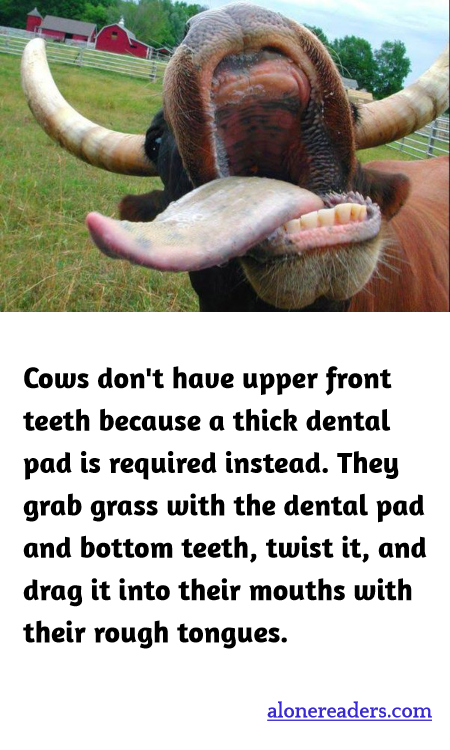
Cows, often recognized for their serene grazing habits, have a unique dental structure adapted for their diet of grass and other tough plant material. Unlike many other animals, cows do not have upper front teeth. Instead, their upper jaw features a thick, tough dental pad. This arrangement is not a mere quirk of evolution but a specialized adaptation that aids in their feeding.
The dental pad is a hard, gum-like surface against which the lower teeth can press grass and foliage. This surface is crucial for cows as they feed primarily on grasses which require a certain method of eating for optimal digestion. Cows grasp the grass using their lower teeth and the dental pad. They then pull and twist the grass, breaking it off. This method is efficient, allowing cows to quickly gather large amounts of grass during feeding.
Moreover, cows have a rough tongue that plays a significant role in their feeding process. The tongue helps them to maneuver the grass into their mouths after it is clipped between their lower teeth and dental pad. This rough texture is perfect for grasping slippery blades of grass, ensuring that cows can eat efficiently. Once inside the mouth, the grass is further processed by the molars at the back of the mouth, which grind it into smaller, more digestible pieces.
This method of feeding is not only efficient but also necessary for their digestion. Cows are ruminants, meaning they have a specialized stomach system to break down the fibrous plant material that forms the bulk of their diet. The initial physical breakdown of grass by their unique dental structure is the first step in a complex digestive process. This process involves regurgitating partially digested food (cud) and rechewing it to further break down the plant material and stimulate digestion.
Therefore, the absence of upper front teeth and the presence of a dental pad in cows are perfect examples of evolutionary adaptation. These features facilitate the cows' grazing habits, ensuring they can maintain their diet and support their method of digestion, vital for their survival and well-being in their natural habitats. The simplicity yet effectiveness of this adaptation highlights the intricate ways in which different species have evolved specific characteristics to thrive in their respective environments.
