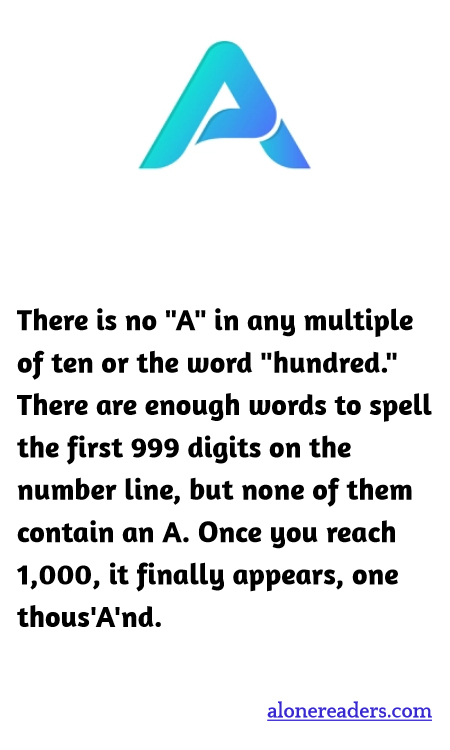
In the intriguing world of numbers and language, a fascinating observation emerges about the representation of numbers in the English language, particularly how they accommodate the letter 'A'. This peculiar phenomenon foregrounds a specificity in language usage and numeric structure. In exploring numbers from one to one thousand, an interesting pattern is revealed: words for multiples of ten (such as ten, twenty, thirty, etc.), as well as the word "hundred," intriguingly do not contain the letter 'A'. This exclusion remains consistent through all such terms up to 999, be it two hundred, three hundred or numbers like fifty, sixty, or ninety.
It's not until one thousand is reached that the letter 'A' makes its first appearance in the numeric sequence's full word representation. This occurrence underlines an unexpected linguistic peculiarity; the construction of numerals in English seeming to arbitrarily exclude then suddenly include the letter. One might ponder why the language developed in such a way that avoided 'A' in these specific numeric ranges. Could it just be a coincidence, or is there an underlying structural reason tied to ancient linguistic practices?
Such an analysis can lead to deeper explanations concerning the evolution of language and how numbers were represented and utilized by ancient civilizations. It's intriguing to consider how arbitrary elements of language - such as the presence or absence of a particular letter in specific terms - might offer insights into historical patterns of language use, development, and possibly even aspects of cultural significance related to numerology and commerce.
Thus, this little oddity about the 'A' in the lower numerical values before 1,000 adds a layer of charm and curiosity to our understanding of language intertwined with numbers. As we parse through linguistic norms and numerical representations, these quirks can serve as humble reminders of the arbitrary yet fascinating nature of the constructs humans rely on to navigate the world.
