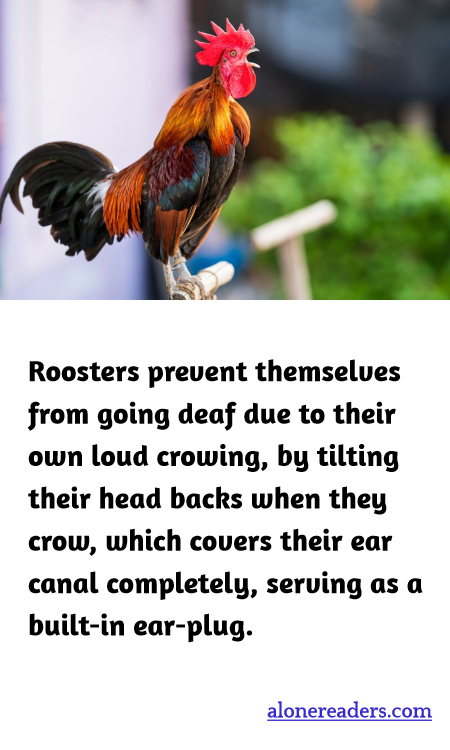
Roosters are known for their powerful and often incessant crowing, a sound that can reach up to 140 decibels, which is comparable to standing next to a jet engine. Given their daily routines, it's intriguing to learn that roosters have a natural mechanism to prevent potential hearing damage from their own calls. Scientists have discovered that roosters have a built-in form of protection for their ears; when they tilt their heads back to crow, this action covers their ear canals completely.
This self-protective maneuver works because when a rooster throws its head back to emit its boisterous crow, its auditory canals are covered by a flap of skin, effectively muting the sound and shielding the inner ear mechanisms. This built-in defense ensures that despite frequent crowing, roosters do not suffer from hearing loss, which would severely affect their ability to communicate and maintain their role within the flock. In essence, the same vigorous behavior that enables roosters to assert territorial dominance and organize their group also has a precaution built in to preserve their hearing faculties.
The function of this ear-covering phenomenon in roosters showcases a fascinating aspect of evolutionary adaptation. By evolving such a simple yet effective biological safeguard, roosters can continue their vocal duties without the risk of auditory damage. This unique adaptation highlights the intricate balance of nature, where the anatomy and behavior of an organism are finely tuned to its environmental and social needs. Further exploration of these adaptations can provide deeper insights into the ways animals have evolved traits in response to specific challenges in their environment.
