More About This Card
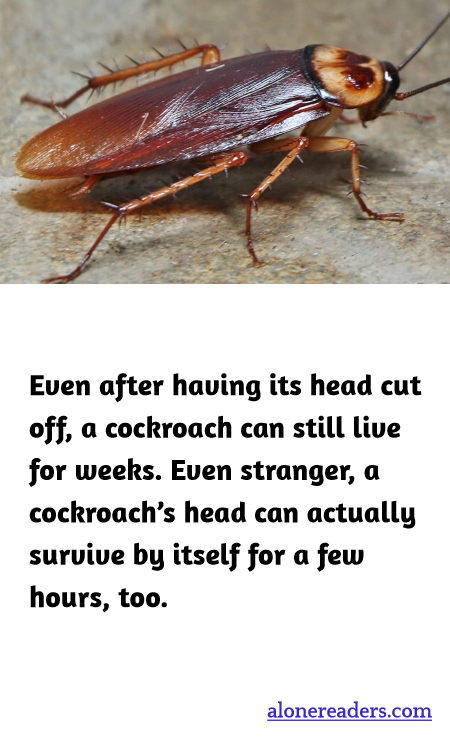
Cockroaches are incredibly resilient creatures known for their ability to withstand extreme conditions that would be fatal to most other forms of life. One of the most astonishing demonstrations of this resilience is that a cockroach can survive for several weeks without its head. This bizarre survival capability stems from the cockroach’s unique biological structure and simpler circulatory and respiratory systems. Unlike mammals, cockroaches do not have a centralized system for blood circulation and do not breathe through their mouths. Instead, they breathe through tiny holes in each of their body segments, and oxygen is delivered directly to tissues through a series of tubes known as tracheae.
The reason a cockroach can live without its head is that its head is primarily used for ingestion and has less bearing on some of the core physiological processes that are spread throughout their bodies. After a cockroach loses its head, clotting will seal off the neck and prevent it from bleeding out – unlike vertebrates which have high pressure blood systems. The body can continue to function on auto-pilot, so to speak, due to the decentralized nervous system. Essentially, all the critical body functions and control reflexes are managed by nerve tissue that is distributed throughout each body segment.
Moreover, cockroaches are cold-blooded and have a much lower metabolism, which means they require much less food and can survive on their fat reserves for weeks. The ultimate cause of death for a decapitated cockroach is not blood loss or organ failure, but rather the inability to drink water and hence dehydration proving fatal.
Interestingly, the severed head of a cockroach can also survive for several hours, effectively waving its antennae sometimes, thanks to nerve endings that can operate independently for a short time. This is possible if there is enough energy in the form of ATP available in the head to power these nerve endings, although the head will not be able to regenerate the rest of the body or vice versa.
This incredible feat of survival illustrates not only the hardiness of cockroaches but also provides valuable insights into potential medical and scientific applications. The decentralized body functions and nerve networks of cockroaches are subjects of study with hopes that understanding them can lead to better outcomes in trauma medicine and organ transplants for humans. Interesting as it may be, the cockroach’s ability to live without its head does cement their reputation as one of the toughest creatures on Earth.