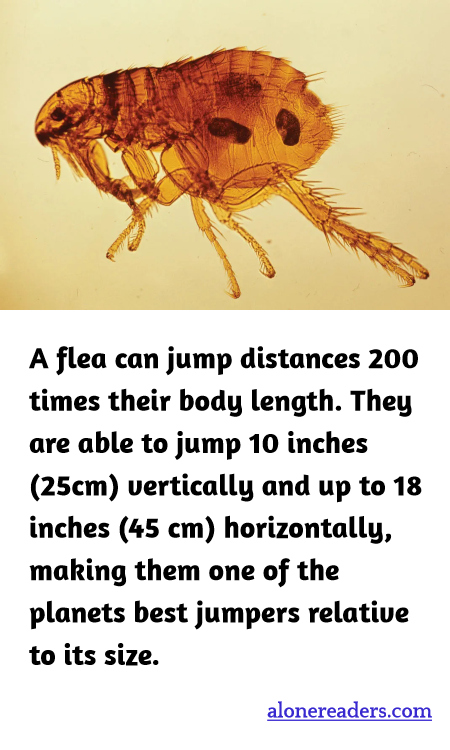
Fleas are astonishing creatures, particularly known for their extraordinary jumping abilities. Despite their minuscule size, typically just an eighth of an inch long, these tiny insects can vault distances that are 200 times their body length. This capability translates to impressive leaps of up to 10 inches vertically and 18 inches horizontally. Such feats of athleticism make fleas one of the best jumpers on the planet relative to body size.
The secret behind their impressive leaps lies in the unique structure of their bodies. Fleas are equipped with long hind legs that angle backwards, which function much like a catapult. The key to their jumping prowess is a protein called resilin, found in their hind legs. This protein is extraordinarily elastic and efficient at storing energy, allowing fleas to release powerful bursts of energy when they jump. The resilin acts like a rubber band, stretching as the flea crouches and snapping quickly to release energy when they launch into the air.
This ability is not just a fascinating aspect of their physiology but is crucial for their survival. As external parasites, fleas depend on this skill to find hosts. Their jumps allow them to suddenly spring from the ground and navigate through pet fur or human clothing to feed on blood. Furthermore, this skill assists them in quickly escaping potential threats and spreading to new hosts, thus facilitating their life cycle and reproduction.
Aside from their athletic prowess, the flea’s capability to jump great distances plays a significant role in how they spread diseases. Because they can easily move between hosts, they are notorious vectors for various diseases including the plague, typhus, and tapeworms. Understanding the mechanics behind their jumps can help in developing better flea control methods, which is vital for preventing the spread of the diseases they carry.
In essence, while fleas can cause significant distress to their hosts and are capable of spreading diseases, they are also remarkable for their extraordinary biomechanical abilities. These tiny insects provide an excellent example of how evolution can sculpt highly specialized traits suited for survival and reproduction in specific environmental niches. Their jumping is not just a trivial fact, but a pivotal characteristic that plays a critical role in their existence and interaction with the world around them.
