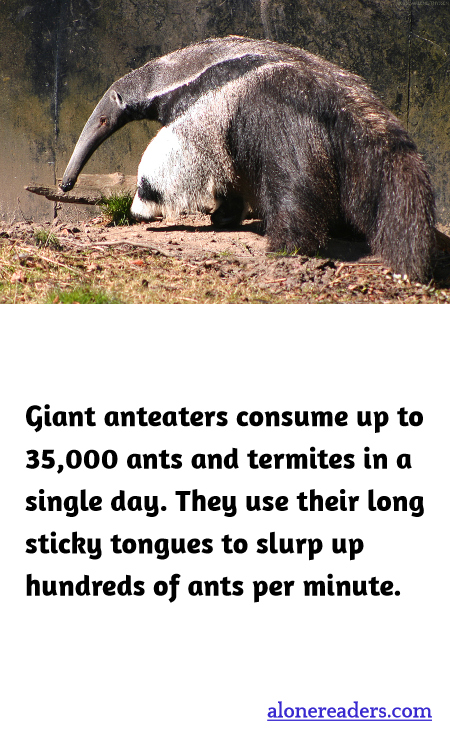
Giant anteaters, remarkable creatures native to Central and South America, are known for their distinctive eating habits and physical features that facilitate their unique diet of ants and termites. These mammals can consume an astounding amount of up to 35,000 insects in just one day. This feat is made possible by their specialized long, sticky tongues, which can measure up to two feet in length. The anteater's tongue is not only long but also extremely agile and coated with a viscous saliva that helps catch ants and termites efficiently.
The giant anteater’s feeding method is highly adapted to minimize the danger and irritation of ant bites. It flicks its tongue up to 160 times per minute when feeding, spending just a fraction of a second at each ant colony. This rapid feeding strategy is crucial as it helps reduce the amount of time the anteater is exposed to the defensive attacks of the ants. Despite their voracious appetite for insects, giant anteaters never completely destroy a nest, ensuring that they can return to it later for subsequent feedings, thus maintaining a sustainable source of food.
Furthermore, the anatomy of a giant anteater is uniquely fitted to support its dietary habits. Their elongated snout contains a small mouth and nostrils at the end, which effectively limits their exposure to the defensive measures of their prey. The nose also serves as a protective element, preventing ants from crawling into more sensitive areas. Additionally, giant anteaters have robust claws that are used to tear open ant mounds and termite nests, allowing them easier access to their meals.
Giant anteaters are mainly solitary creatures and spend much of their day foraging in grasslands and rainforests. Despite their impressive feeding habits, these animals remain on the list of threatened species due to habitat loss, roadkills, and hunting. Conservation efforts are vital to ensure that these unique creatures do not vanish, taking with them an extraordinary example of evolutionary adaptation and ecological balance. As such, protecting the habitats where they thrive and regulating human activities that pose threats can help maintain the populations of not only the giant anteaters but also the complex ecosystems they inhabit.
