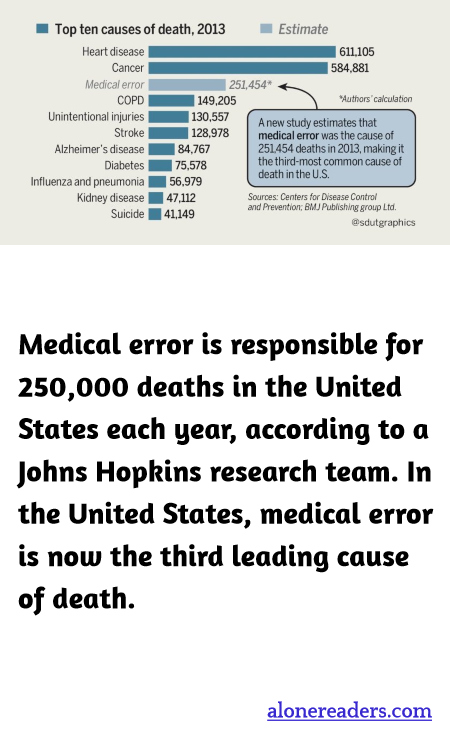
Medical errors are alarmingly common in the healthcare sector, and their consequences are profoundly severe. Research from a Johns Hopkins study pegs the number of deaths due to medical errors in the United States at an astounding 250,000 annually. This staggering figure places medical errors as the third leading cause of death in the country, trailing only heart disease and cancer.
These errors can take various forms, including diagnostic mistakes, surgical complications, dosage errors, and a failure to act on test results. Moreover, this issue is compounded by a lack of comprehensive reporting and inconsistencies due to the decentralized nature of healthcare governance across states and institutions. The problem is not limited to a single setting or procedure but is pervasive across many areas of healthcare.
Addressing this crisis requires a systemic approach. Enhancing reporting systems, improving communication among healthcare teams, patient education, and regulatory changes are paramount. Digital health records and automated systems for drug dispensing have shown potential to reduce errors significantly. Importantly, creating a culture that prioritizes patient safety over blame can encourage healthcare providers to report and learn from errors rather than concealing them.
Another essential focus is on fostering a deeper understanding of why these mistakes happen. Medical education and ongoing training need to emphasize the importance of precision and attention to detail. Making continued learning about the latest technological and procedural advancements in healthcare mandatory will also play a crucial role in minimizing these errors.
Through concerted effort and systemic overhaul, the goal is to not merely lower the number of deaths by medical errors but also to restore trust in a system that is fundamental to society’s wellbeing.
