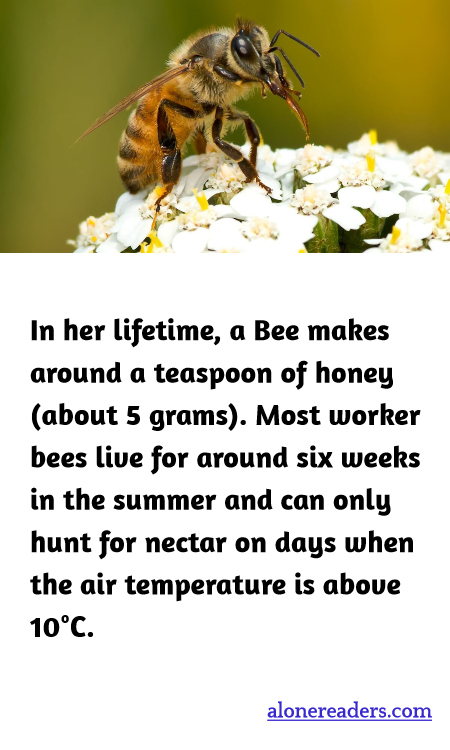
Honeybees are fascinating creatures, contributing significantly more to our ecosystem than is often recognized. Each bee, in its brief existence, exhibits an extraordinary commitment to its hive and plays a vital role in the ecosystems around us. Throughout its life, which spans approximately six weeks during the summer, a worker bee will produce about a teaspoon of honey, equivalent to roughly 5 grams. This small yield underscores the immense effort and collaboration required by an entire hive to produce significant quantities of honey.
Worker bees’ lives are primarily dedicated to foraging for nectar, but they can do this only under specific conditions. Temperature plays a crucial role in their ability to venture out and collect nectar; the air must be above 10° C. On colder days, bees cannot leave their hive, which limits their ability to gather the necessary resources required for honey production. This sensitivity to temperature means that their active days are even fewer than their already short lives would suggest.
During their foraging trips, bees not only collect nectar, which is later converted into honey, but also pollinate a variety of plants. This pollination is vital for the reproduction of many flowers and crops, making bees essential participants in maintaining the health of ecosystems and agriculture. Thus, while the teaspoon of honey that a single bee produces in its lifetime might seem minuscule, the collective effort of the hive contributes significantly to ecological health and food production.
The incredibly efficient yet fragile life cycle of the bee highlights the importance of protecting these creatures and their environment. Factors such as climate change, pesticide use, and habitat destruction pose significant threats to bee populations. Preserving their natural habitats and creating bee-friendly environments in agricultural and urban areas can help protect these essential pollinators, ensuring they continue to support our ecosystems and livelihoods.
The labor of bees, therefore, extends far beyond honey production. They are key actors in a much larger story of ecological and agricultural interdependence, and their protection is crucial for sustaining natural biodiversity and continued food security. As such, understanding and supporting bees and their role in our environment is essential, providing benefits that reach far beyond the sweet products of their tireless labor.
