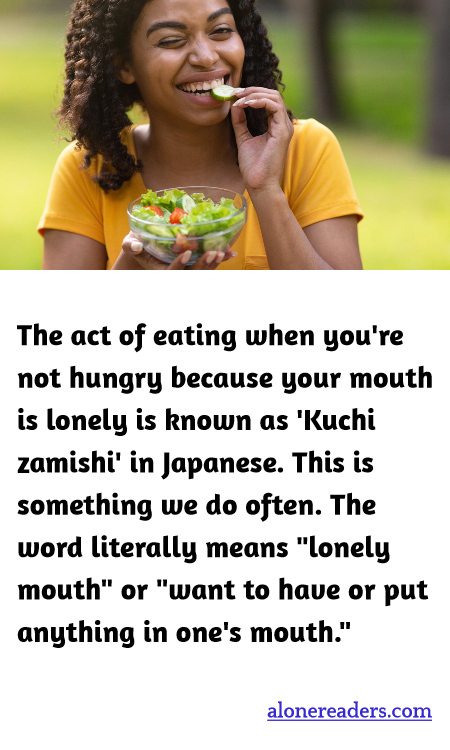
Kuchi zamishi, a Japanese term that literally translates to "lonely mouth," strikingly captures a unique yet universal human behavior—eating not out of hunger but because it feels comforting or provides a momentary distraction. This behavioral pattern reflects more than just casual snacking; it’s often a psychological response to boredom, stress, or underlying emotions. The mouth feels 'lonely', craving stimulation not because the body needs food for energy, but because eating can bring comfort, occupy the mind, or even offer a sensory escape from life's monotony or pressures.
In many cultures, food is not only a source of nutrition but also a means of social interaction and a way to express cultural identity. Hence, eating occupies a central place in our daily lives beyond mere sustenance. When we engage in kuchi zamishi, we're sometimes seeking to replicate these deeper roles that food plays, using it as a tool to momentarily feel better or more connected, even if we're alone.
Understanding why we engage in kuchi zamishi can also shed light on our emotional and psychological well-being. It often occurs in moments of idleness or when one is procrastinating from facing a challenging task. The act of chewing and tasting can be a diversion, a way to break the monotony of a task, or a moment of respite from stress. However, this habit can also lead to unhealthy eating patterns if not checked, potentially leading to issues like weight gain or disrupted eating schedules, which in turn affect physical health.
Recognizing when one is engaging in kuchi zamishi is the first step towards addressing it. Instead of reaching for snacks, one might consider whether they are truly hungry or just looking to fill a psychological void. Alternatives such as drinking water, taking a short walk, or engaging in a quick non-food-related activity can be effective ways to respond to the urge of a lonely mouth without overindulging in eating.
Ultimately, kuchi zamishi is a fascinating example of how human emotions and physical sensations intertwine, demonstrating that our relationship with food is as much about mental and emotional nourishment as it is about physical sustenance. By being more mindful of why and how we eat, we can improve not just our physical health, but our emotional well-being too.
