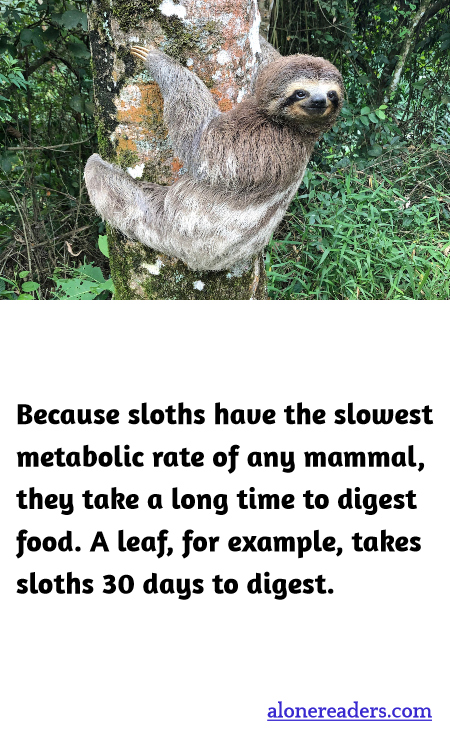
Sloths, those intriguing creatures residing in the tropical rainforests of Central and South America, exhibit a remarkably unique physiology among mammals. Known for their languid movements and spending most of their life hanging upside-down from tree branches, sloths possess the slowest metabolic rate found in the mammalian kingdom. This sluggish metabolic rate is intricately linked to their diet and digestive process, which is notably slow to accommodate their low-energy lifestyle.
Primarily herbivorous, sloths feed on leaves, some fruits, and flowers. However, leaves, their main food source, are not particularly nutritious and are hard to digest. The leaves of the trees in their native habitats are often tough and contain chemical defenses against herbivores, like tannins, which are challenging for even the most robust digestive systems. Sloths have adapted to this by having an unusually slow digestion process. It takes a sloth around 30 days to completely digest a single leaf. This slow rate of digestion is necessary to extract the maximum amount of nutrients possible from their leafy diet.
The sloth's digestive system is aided by their large, multi-chambered stomachs, which host symbiotic bacteria that help break down the tough leaves. This process of fermentation releases the nutrients slowly and steadily, aligning well with the sloth's low energy expenditure. This means that a sloth's energy output is finely tuned to its energy intake, a balance critical for its survival in the nutrient-poor environments of the rainforest canopy.
Interestingly, the slow digestion rate also impacts other aspects of a sloth's life, including their movement and reproductive cycles. Their lethargic behavior is a direct result of their metabolic restraint; they simply cannot afford the energy to move quickly or frequently. Even the process of reproduction and gestation in sloths is a prolonged affair, with pregnancies lasting several months and infants being dependent on their mothers for at least the first year of life.
Thus, the sloth's slow digestion is not a drawback but a fascinating adaptation that allows these unique creatures to thrive in their specific ecological niche. Each aspect of a sloth’s physiology has evolved to optimize energy use, from their slow movements to their extended digestion. This efficiency enables them to survive in environments where food is scarce and not very nutritious, demonstrating a remarkable example of adaptation and survival in the animal kingdom.
