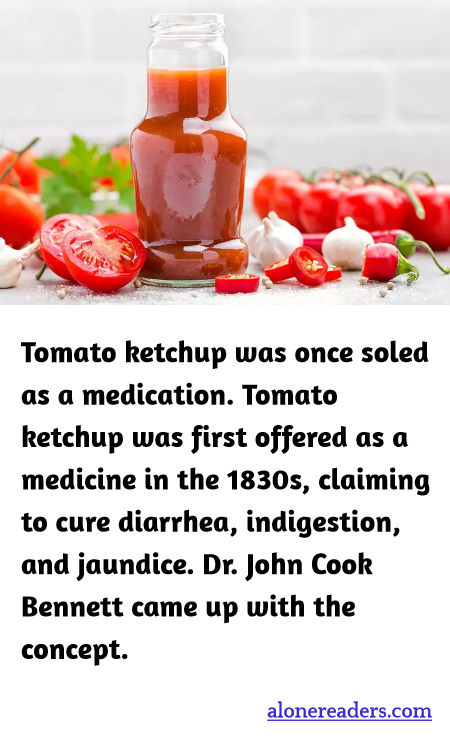
In the early 19th century, culinary practices and health beliefs were vastly different from what they are today, with many foods being touted for their supposed medicinal properties. One of the more surprising examples of this is tomato ketchup, which was originally introduced as a medication before becoming the popular condiment we know today. It was in the 1830s that tomato ketchup was claimed to have medicinal benefits. Dr. John Cook Bennett, a physician and professor at Willoughby University in Ohio, was among the first to propose these health claims.
Dr. Bennett believed that tomatoes, which were relatively new to the American diet at the time, could treat various ailments. In an age when the causes of diseases were poorly understood and effective treatments were scarce, such claims found a receptive audience. Dr. Bennett asserted that tomato ketchup could cure diarrhea, indigestion, and jaundice—a striking promise at a time when such conditions could be debilitating or even fatal.
Capitalizing on these claims, entrepreneurs began producing and selling medicinal concoctions of tomato ketchup. One of the most notable of these was Archibald Miles, who marketed his own version called "Dr. Miles’ Compound Extract of Tomato." Unlike the ketchup we are familiar with today, these early versions often included ingredients like sugar, spices, and sometimes even drug components to enhance their supposed health benefits.
However, over time, as medical science advanced, the supposed health benefits of tomato ketchup were debunked. The condiment transitioned from a treatment to a purely culinary product by the late 19th century. The change was driven by a broader understanding of nutrition and medicine, and by evolving food processing technologies that helped improve the taste and preservation of tomato ketchup, aligning more with culinary uses rather than medicinal.
Today, tomato ketchup is one of the most ubiquitous and beloved condiments globally, but its history as a purported medicinal remedy is a fascinating chapter that reflects the evolving understanding of health and nutrition. It underscores how cultural contexts and scientific understanding can shape the uses and perceptions of everyday products. As we enjoy ketchup today—most commonly alongside fries or burgers—it's intriguing to think of a time when it was found in medicine cabinets instead of kitchen cupboards.
