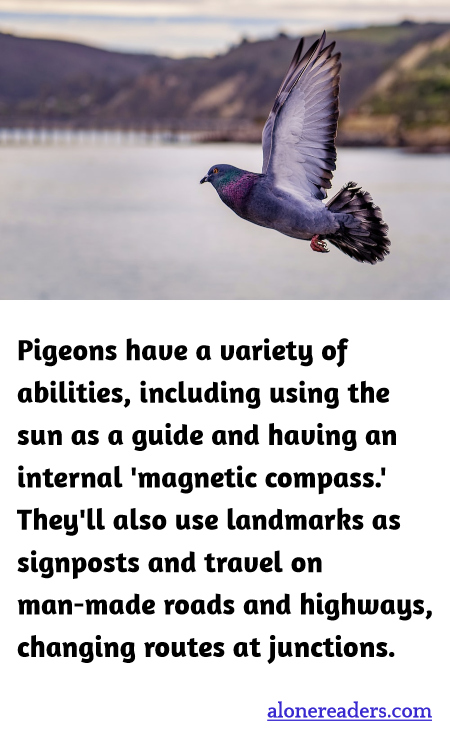
Pigeons, often considered simple city dwellers, are actually equipped with an impressive array of navigational skills that allow them to find their way across vast distances. One of their most fascinating abilities is to use the sun as a guide. Similar to ancient human navigators, pigeons observe the position of the sun in the sky to help maintain their sense of direction while flying. This solar guidance is complemented by an internal 'magnetic compass’ that pigeons use to orient themselves in relation to the Earth's magnetic fields, a skill they share with other migratory birds.
In addition to celestial navigation, pigeons possess the remarkable ability to recognize and remember visual landmarks. They use prominent features of the landscape such as mountains, rivers, and buildings to navigate, often following familiar routes back to their nests. Intriguingly, research has shown that pigeons can also navigate cityscapes by following man-made roads and highways, sometimes even changing their flight paths at junctions, much like drivers following a map.
These combined abilities make pigeons extraordinarily adept at homing, which is why they were used historically for delivering messages across long distances. Carrier pigeons, as they were known, have played crucial roles during war times by carrying vital communications. Their impeccable sense of direction ensured that the messages often reached their destinations with astounding accuracy and speed, despite the challenges of long-distance travel and harsh environments.
The navigational skills of pigeons are not just of historical interest but continue to be a subject of scientific study. Researchers delve into understanding the exact mechanisms behind pigeons' homing ability, which could potentially inspire advancements in autonomous vehicle technologies and GPS systems. By studying these avian navigators, scientists hope to uncover further insights into the complex interplay of environmental cues and sensory perceptions that guide animal migration—a phenomenon that remains one of nature's most intriguing mysteries.
