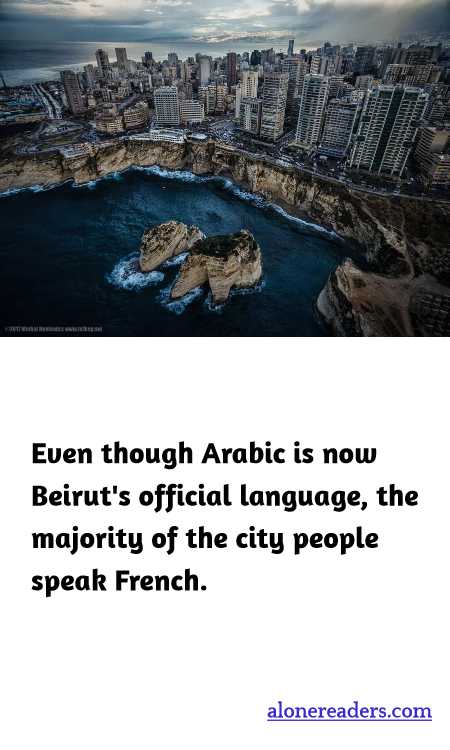
In Beirut, the capital city of Lebanon, a fascinating linguistic phenomenon reveals the complex history and cultural dynamics of the region. Arabic is the official language and is widely used, reflecting the city's Arab heritage and national identity. However, a significant portion of Beirut's population fluently speaks French, a legacy of the French Mandate from 1920 to 1943. This bilingualism is more than just a residue of historical events; it represents a conscious choice by the people of Beirut, influenced by factors like education, social status, and international relations.
French in Beirut is evident not only in casual conversation but also in business, education, and the media. Many of Beirut’s schools offer instruction in French, fostering a bilingual population proficient in both Arabic and French. This dual-language education system serves as a bridge that connects Lebanon with the francophone world, fostering cultural and economic ties. Moreover, the prevalence of French has made Beirut an attractive destination for international businesses and diplomatic missions from French-speaking countries.
The preference for speaking French is also a social indicator in Beirut. It often connotes a certain level of education and sophistication, and in some circles, it's considered a language of the elite. This social prestige associated with French has encouraged its continued use and preservation among the upper classes of Beirut.
Furthermore, Beirut's French connection goes beyond practicalities and status symbols; it plays a critical role in the city’s cultural scene. French literature, cinema, and art are highly influential, celebrated in festivals and events throughout the year. The Francophonie Festival, for instance, is a highlight in the city’s cultural calendar, attracting artists and intellectuals from across the francophone world.
However, the widespread use of French in Beirut should not overshadow the importance of Arabic. Arabic, particularly the Lebanese dialect, remains essential to local identity and heritage. It is the language of home and heart for many Beiruti, used in daily life, popular culture, and traditional media. The dynamic balance between Arabic and French underscores the city’s cosmopolitan nature, a place where Eastern and Western cultures merge harmoniously.
In conclusion, while Arabic is Beirut’s official language, the pervasive use of French speaks to the city’s historical legacy and its continued cosmopolitan character. It highlights how languages can serve as a link between past and present, and between local identity and global engagement. Through its bilingual fabric, Beirut remains not just a city in Lebanon but a cultural crossroads in the Arab and francophone worlds.
