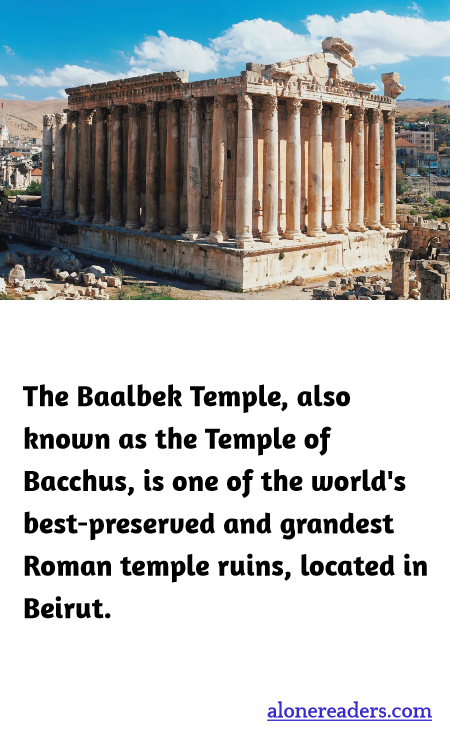
The Baalbek Temple, marvelously known as the Temple of Bacchus, stands as a monumental relic of architectural grandeur in the heart of Baalbek, Lebanon, not Beirut. This magnificent temple is part of a larger complex originally known as Heliopolis during the Hellenistic period. Known primarily for its colossal dimensions and intricate decorations, the temple is deemed one of the best-preserved Roman temple ruins in the world.
Dedicated to Bacchus, the Roman god of wine, agriculture, and fertility, the temple showcases the cultural amalgamation and religious fervor of ancient Roman times. It was constructed during the reign of Emperor Antoninus Pius around 150 AD. The structure's sheer size and elaborate ornamentation stand as a testament to Roman engineering and architectural prowess. The temple's entrance is marked by a propylaeum followed by a hexagonal forecourt, leading to a rectangular courtyard. This arrangement was typical of Roman temple complexes, reflecting both utility and aesthetics in design.
One of the most remarkable features of the Temple of Bacchus is its intricate carvings. The walls and columns are adorned with scenes depicting mythological figures and deities, showcasing the fine craftsmanship of Roman sculptors. The inner sanctum of the temple holds the massive, yet intricately carved, 13-meter high columns which impress all who wander among them. These columns not only add to the structural integrity but also enhance the aesthetic appeal, creating a rhythmic harmony that captivates the viewer.
The preservation of the Baalbek Temple is primarily attributable to its continuous use through various periods. After the fall of the Roman Empire, the temple complex was converted into a fortress by the Byzantines and later used by Muslims as a castle during the Islamic era. Each era left its imprint, contributing to a rich historical overlay that adds depth to its already profound legacy.
In contemporary times, the Temple of Bacchus is not just a silent spectator of the bygone era but a vibrant part of Lebanon's cultural heritage. It plays host to the Baalbek International Festival, which attracts artists and spectators from around the globe. This annual event celebrates music, dance, and theatre, effectively intertwining the ancient with the modern, allowing people to experience the timeless splendor of the temple amidst live artistic performances.
The Baalbek Temple remains a quintessential example of ancient Roman architecture and cultural might. As a monument, it not only embodies the architectural achievements of the past but also continues to foster cultural interactions in the present, making it a vital piece of world heritage that transcends the ages. Its preservation and continued relevance highlight the enduring fascination with ancient civilizations and their legacies.
