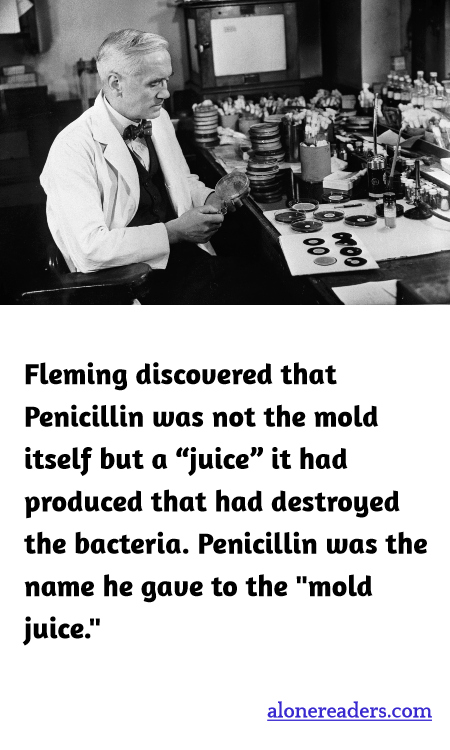
In 1928, an incredible discovery that would revolutionize the world of medicine was made by Scottish bacteriologist Alexander Fleming. While working at St. Mary's Hospital in London, Fleming noticed something peculiar during an experiment with Staphylococcus bacteria. After returning from a holiday, he observed that a mold called Penicillium notatum had accidentally contaminated his petri dishes and had killed the bacteria growing around it.
Instead of discarding the contaminated dishes, Fleming decided to explore this unexpected phenomenon further. He found that it wasn't the mold itself, but rather a substance it was secreting that proved lethal to the bacteria. This substance, which he named "penicillin," turned out to be the world’s first true antibiotic. Fleming's pioneering work showed that this "mold juice" was capable of effectively killing a wide range of harmful bacteria.
Further studies into the nature and applications of penicillin were undertaken, particularly by the team of Howard Florey, Norman Heatley, and Ernst Boris Chain at the University of Oxford. They developed methods to purify and produce penicillin in sufficient quantities to be useful in treating infections. This work was significantly accelerated by the pressures of World War II, as the potential for penicillin to reduce deaths from wound infections became apparent.
The introduction of penicillin marked a watershed moment in antimicrobial therapy. Infections that were once considered deadly could now be cured within days. What’s more, the discovery ushered in an era of antibiotics, as other similar microbial agents were also discovered and developed into drugs. For their respective roles in penicillin's development, Fleming, Florey, and Chain were jointly awarded the Nobel Prize in Physiology or Medicine in 1945.
Hence, Fleming's initial observation and subsequent research on the antibacterial effect of Penicillium notatum not only transformed medical treatment but also saved countless lives and shaped modern healthcare practices, emphasizing the importance of serendipity and further research in scientific breakthroughs. The story of penicillin is a testament to the fact that even seemingly minor or accidental findings can lead to monumental discoveries with far-reaching impacts.
