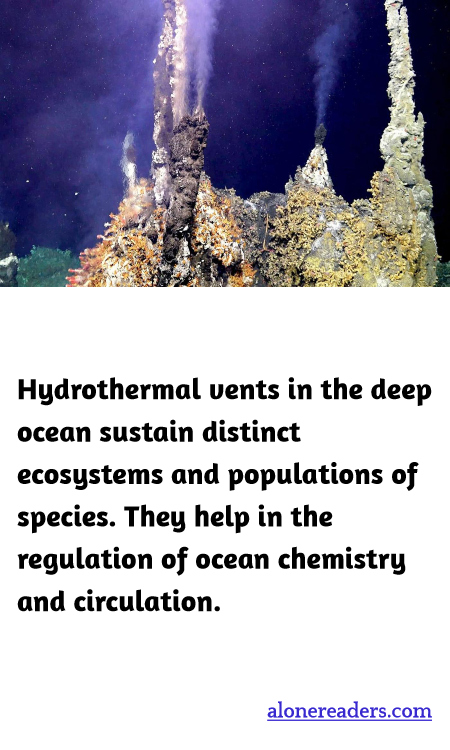
Deep beneath the ocean's surface, hydrothermal vents serve as both a cradle for extraordinary life forms and an essential cog in ocean chemistry and circulation. Located along mid-ocean ridges, where tectonic plates are diverging, these vents spew superheated, mineral-rich water into the cold, dark depths of the ocean. This extreme environment, devoid of sunlight, is where some of the most unique ecosystems on our planet thrive.
Hydrothermal vents are inhabited by an array of organisms that have adapted to extreme conditions. Species such as tube worms, vent mussels, and scaly-foot snails not only withstand, but require, the high temperatures and pressures of these underwater geysers. These organisms have developed symbiotic relationships with chemosynthetic bacteria, which convert the chemicals emitted by the vents—like hydrogen sulfide—into organic matter. This process, known as chemosynthesis, is akin to photosynthesis but does not rely on sunlight, instead drawing energy from chemical reactions. This remarkable adaptation allows life to flourish at depths where sunlight cannot penetrate, making hydrothermal vents hotspots of deep-sea biodiversity.
The influence of hydrothermal vents extends beyond their immediate surroundings. They play a vital role in the regulation of ocean chemistry and circulation. As superheated water interacts with cold sea water and volcanic rocks at the vent sites, it triggers complex chemical processes. These processes result in the release of minerals and metals, such as iron and manganese, into the ocean. These elements are crucial for many biological processes and contribute to the nutrient cycle within the marine ecosystem.
Moreover, the flow of warmer, mineral-rich water from hydrothermal vents also contributes to thermohaline circulation, a global-scale ocean circulation driven by differences in water density, which is affected by temperature and salinity. This circulation pattern plays a critical role in regulating the Earth’s climate and helps in distributing heat and nutrients around the globe. The study of hydrothermal vents has even broader implications, including insights into the origins of life on Earth, as these vents present conditions similar to those when life first evolved.
Understanding the complex interplay between hydrothermal vents and the surrounding ocean environment helps scientists predict changes in global climate and biological diversity. Despite their importance, these ecosystems face threats from deep-sea mining and climate change. As such, ongoing research and conservation efforts are crucial to preserving not only the vents themselves but the global environmental processes they influence.
