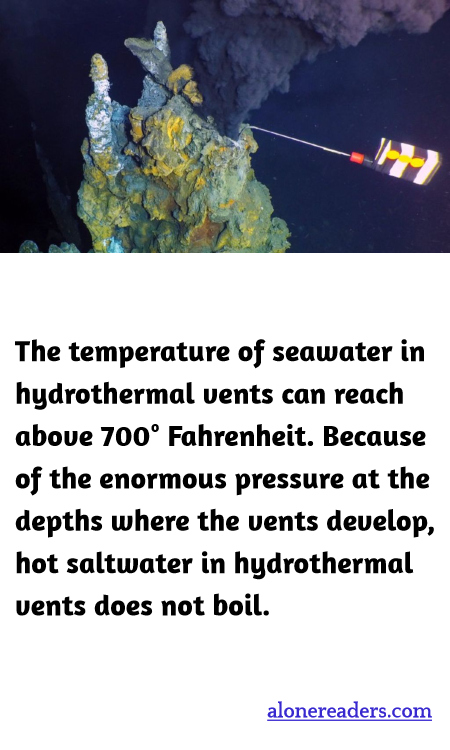
Deep beneath the ocean's surface, hydrothermal vents present a strikingly different environment compared to the chilly waters that dominate much of the ocean's ecosystem. These vents, often located along mid-ocean ridges where tectonic plates are diverging, emit superheated water that can exceed temperatures of 700° Fahrenheit. This extreme heat is primarily due to the magma that lies relatively close to the earth's crust in these areas, heating the surrounding seawater as it seeps through cracks in the seabed.
Interestingly, despite these scalding temperatures, the water in hydrothermal vents does not boil. This phenomenon can be attributed to the immense pressure exerted at the depths where these vents are found, typically ranging from 1,500 to 5,000 meters below the ocean surface. At such depths, the pressure is significantly higher than at sea level, effectively increasing the boiling point of water. Consequently, water that would normally turn to steam at 212° Fahrenheit at the surface remains in liquid form even at temperatures several times higher in the environment of a hydrothermal vent.
Hydrothermal vents are not just fascinating for their physical properties but also for the unique ecosystems they support. Life in these extreme conditions thrives primarily due to chemosynthesis, a process distinct from photosynthesis used by most other life forms on Earth. Microorganisms in hydrothermal vent ecosystems utilize the chemicals dissolved in the vent fluids — such as hydrogen sulfide — to produce organic material. This forms the base of the food web in these isolated systems, supporting a variety of organisms including giant tube worms, clams, and various species of shrimp and fish, all adapted to survive in the harsh conditions of high temperatures, high pressure, and complete darkness.
Thus, the extreme environment of hydrothermal vents not only challenges our understanding of where life can thrive but also contributes to our knowledge of the diverse and resilient nature of life on Earth. These underwater geysers illustrate the incredible adaptability of life and open up possibilities for biological processes that might be analogous to conditions on other planetary bodies, aiding in the broader search for extraterrestrial life.
