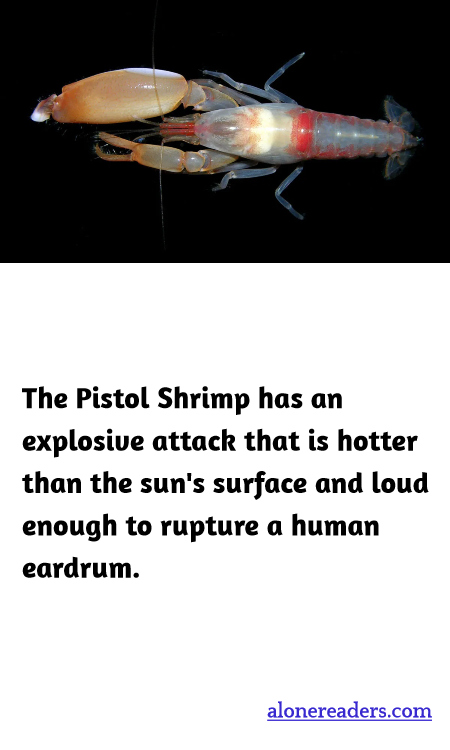
The pistol shrimp, also known as the snapping shrimp, is one of nature’s most fascinating creatures due to its unique and powerful hunting method. This small crustacean, only about 1-2 inches in length, packs a significant punch by using a specialized claw that functions much like a firearm. This claw, when snapped shut, releases a high-velocity jet of water capable of stunning or even killing prey—essentially, an aquatic bullet.
The mechanics behind the pistol shrimp’s lethal snap are truly remarkable. The shrimp’s oversized claw can snap shut at speeds of up to 62 miles per hour, creating a cavitation bubble as it moves through the water. As this bubble collapses, it momentarily reaches temperatures of over 4,700 degrees Celsius—comparable to the surface of the sun—and emits a sound reaching upwards of 218 decibels. For perspective, that's significantly louder than a gunshot's typical 140-160 decibels and can indeed rupture human eardrums if close enough. This sudden burst of energy not only has the potential to stun or kill nearby prey but can also ward off predators.
The effectiveness of the pistol shrimp's attack lies in the combination of shockwave, temperature, and sound. The rapid closing of the claw causes the cavitation bubble to emit a stunningly bright light, a phenomenon known as sonoluminescence, which lasts for a mere fraction of a second. This multi-sensory attack makes the pistol shrimp a formidable hunter and an intriguing subject of study.
Scientifically, the shrimp's ability to generate such high temperatures and loud sounds from a physical snap is a point of interest for researchers studying cavitation. Understanding these dynamics not only provides insights into the adaptative behaviors of marine life but also has potential applications in technology, including the development of more efficient engines and improvements to ultrasonic cleaning.
In marine ecosystems, the pistol shrimp plays a significant role despite its small size. It is a vital part of the food chain, acting both as predator and prey. Moreover, some species of pistol shrimp engage in symbiotic relationships, such as with goby fish, where they share burrows and look out for common predators. This level of ecosystem integration highlights not only the biological success of the pistol shrimp but also its importance in marine biodiversity.
In conclusion, the pistol shrimp is an extraordinary example of the complexity and adaptation found in marine life. Its ability to generate such extreme force and environmental effects through a single snap of its claw is a testament to the intricate balances of evolutionary pressures and environmental adaptations that define life under the sea.
