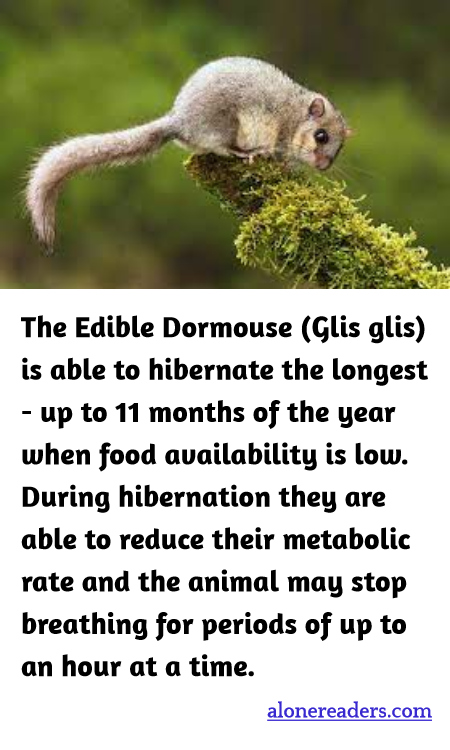
The Edible Dormouse (Glis glis), known for its remarkably long hibernation periods, presents an extraordinary example of extreme mammalian adaptation to seasonal changes. This small rodent, which is native to Europe and parts of western Asia, can hibernate for up to 11 months of the year, particularly when food resources become scarce. This prolonged period of inactivity helps the dormouse conserve energy and survive through harsh conditions until food becomes plentiful again.
During hibernation, the edible dormouse undergoes significant physiological changes, most notably in its metabolic rate, which decreases dramatically. This reduction in metabolic activity allows the dormouse to extend its energy reserves over the months of scarcity. Interestingly, one of the more dramatic aspects of its hibernation is its breathing pattern; the dormouse is capable of stopping its breathing for up to an hour at a time. This phenomenon, known as apnea, further reduces the metabolic rate and energy consumption, allowing the animal to sustain its limited fat reserves throughout the period of dormancy.
What is fascinating about the edible dormouse is not just its ability to survive on so little for so long, but also the impact of its hibernation on its life cycle and reproduction. The timing of their reproductive cycle is intricately linked to their hibernation pattern. They reproduce only once a year, with mating occurring shortly after they emerge from hibernation, ensuring that food resources are available for the young. Consequently, their population growth rates are quite slow, as their life strategy emphasizes survival over rapid reproduction.
These unique hibernation capabilities of the edible dormouse contribute to its survival in fluctuating environmental conditions but also pose challenges due to habitat loss and climate change. As temperatures change and human impact grows, the natural cycle of food availability and hibernation may be disrupted, potentially threatening the species with increased vulnerability.
Understanding and studying species like the edible dormouse is crucial for ecological science, offering insights into the complexities of animal adaptations and the broader impacts of environmental changes on biodiversity. The edible dormouse not only intrigues with its survival strategy but also highlights the intricate balance of ecosystems and the importance of conservation efforts to protect such unique species.
