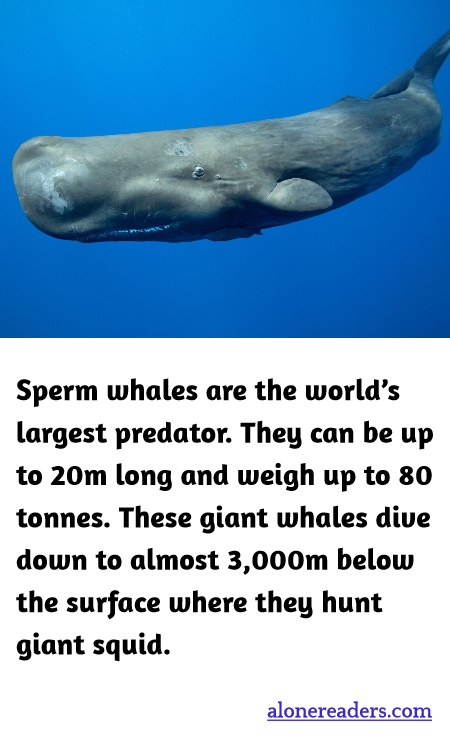
Sperm whales, with their impressive size and deep-sea hunting capabilities, stand out as colossal figures in the marine ecosystem. Reaching lengths up to 20 meters and weighing as much as 80 tonnes, these mammals are not just the largest toothed whales but also the world's largest predators. Their size is rivaled only by their astonishing diving skills; sperm whales can plunge to depths of nearly 3,000 meters, navigating the chilling, dark waters of the ocean.
The primary target of their deep-sea expeditions is the elusive giant squid, a creature that itself has captivated human imagination with its monstrous tentacles and secretive nature. The ability of sperm whales to dive so deep and remain submerged for up to 90 minutes is facilitated by their uniquely adapted physiology. Their large heads, which make up about one-third of their body length, house spermaceti, a waxy substance that is believed to help in buoyancy control during these deep dives.
Aside from their hunting prowess, sperm whales are fascinating creatures for their complex social structures. They live in matrilineal groups, where females and their young travel together, while mature males often lead solitary lives, joining groups only during mating season. These whales communicate using a series of clicks and codas, complex patterns of sounds that serve various purposes from navigating through the pitch-black depths of their underwater world to strengthening social bonds within their pods.
As awe-inspiring as their presence is, sperm whales face significant threats from human activities. Accidental entanglements in fishing gear, ship strikes, and pollution, particularly plastic debris which they can ingest during feeding, pose serious risks to their populations. Moreover, their deep-sea habitat is not entirely shielded from human impact, with noise pollution from ships and submarines potentially disrupting their sensitive echolocation capabilities.
Conservation efforts are crucial to ensure that sperm whales continue to thrive in the world’s oceans. These efforts include enforcing stricter regulations on maritime activities, improving waste management practices to reduce ocean pollution, and supporting protected marine areas. By understanding more about these magnificent creatures and the challenges they face, we can better appreciate their role in the marine ecosystem and work towards a sustainable coexistence.
