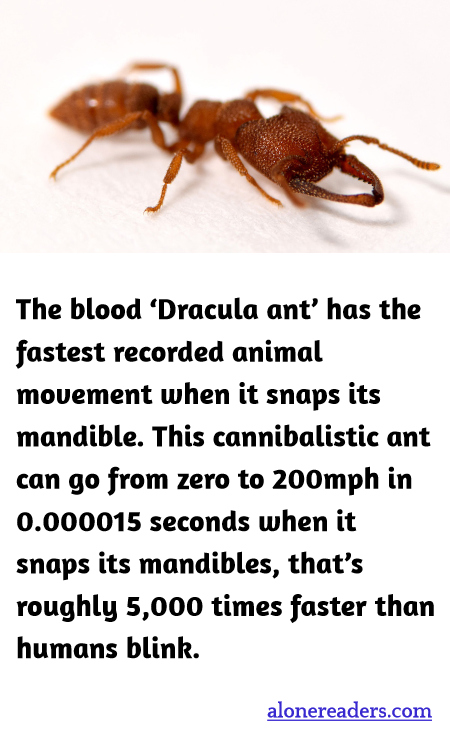
The Dracula ant, scientifically recognized as Mystrium camillae, boasts an extraordinary biological feature that sets it apart from the rest of the animal kingdom. This unique species holds the record for the fastest movement in the animal world with its lightning-fast mandible snaps. When the Dracula ant strikes, its mandibles move at speeds reaching up to 200 miles per hour, a feat that is accomplished in a mere 15 microseconds, or 0.000015 seconds. To put that into perspective, this speed is approximately 5,000 times faster than the blink of an eye for humans.
Native to the tropics of Africa, Asia, and Australia, the Dracula ant's name is derived from its feeding habits. Unlike other ants that hunt or scavenge, Dracula ants practice a form of non-lethal cannibalism. Adult ants typically harvest hemolymph (the equivalent of blood in ants) from their own larvae and pupae. This unusual behavior involves the adults lightly wounding the larvae and then feeding on the exuding fluid, ensuring the continuity of their brood's survival while fulfilling their nutritional needs.
The astounding speed of the Dracula ant's mandibles is not just a record-setting curiosity; it has practical implications for their survival and behavior. This rapid snap allows them to effectively subdue prey, manage colony intruders, and perform other vital community roles with extraordinary efficiency. Researchers studying these ants utilize high-speed camera technology to observe these movements, as they are invisible to the naked eye due to their extreme swiftness.
Understanding the mechanics and evolutionary advantages of such rapid movements not only sheds light on the unique adaptations of the Dracula ant but also provides insights into the broader biological and ecological dynamics of ants and other similar creatures. This fascinating discovery underscores the vast array of strategies and adaptations that evolution has sculpted across countless species, each tailored to meet the survival demands of their unique environmental niches.
