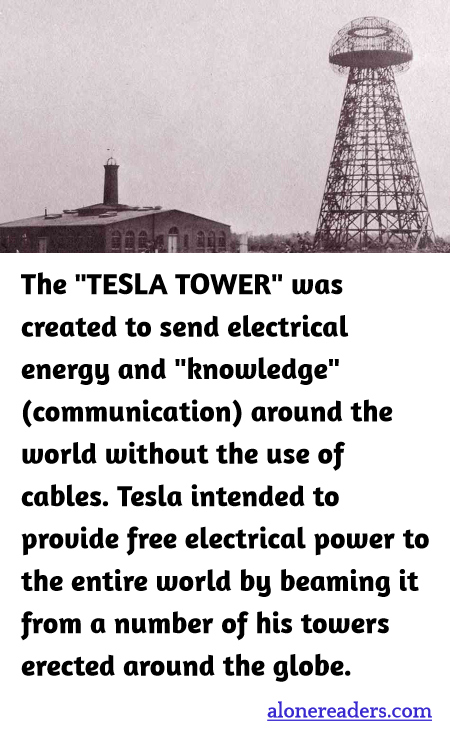
Nikola Tesla, an inventor renowned for his revolutionary work in electricity and magnetism, envisioned the future of global energy with his ambitious "Tesla Tower" project, also known as the Wardenclyffe Tower. Constructed in 1901 in Shoreham, New York, the tower was designed to transmit electrical energy and communications wirelessly across great distances. Tesla's dream was to harness the power to distribute free electricity all over the world, without the need for cables or traditional infrastructure.
The Tesla Tower was a bold venture into wireless energy transmission. Tesla theorized that by utilizing the Earth's ionosphere — a layer of the atmosphere that can conduct electricity — he could transmit electrical energy directly through the ground and across the globe. The system would not only provide free power but would also enable the global transmission of information, creating a wireless communication system.
Despite the innovative concept, the Tesla Tower faced numerous challenges and setbacks. Funding was a persistent issue, as Tesla's grand vision required significant capital investment. His initial partnership with financier J.P. Morgan helped kickstart the project, but as Tesla's ambitions grew, so did the skepticism from his investor. The difficulties in proving the commercial viability of the tower, coupled with Tesla’s extravagant promises about its capabilities, eventually led to a withdrawal of support.
The project was further challenged by technical hurdles. While Tesla was a brilliant engineer, the technology of the time was not sufficiently advanced to fulfill all aspects of his vision. The scope of what he was attempting was enormous, and many technical aspects of wireless energy transmission as imagined by him were not yet fully understood.
By 1917, with World War I impacting the United States and resources being diverted to the war effort, the site was dismantled and sold for scrap. The failure of the Tesla Tower was a significant blow to Tesla’s career and reputation. However, the ideas behind it have lived on and inspired generations of scientists and engineers.
Today, Tesla's concept of wireless transmission of power and data continues to influence advancements in technology, including developments in wireless communications and efforts to create more sustainable and accessible energy solutions. While the "Tesla Tower" itself was ultimately unsuccessful, Tesla’s innovative spirit and forward-thinking concepts continue to spark the imagination and drive technological progress even a century later.
