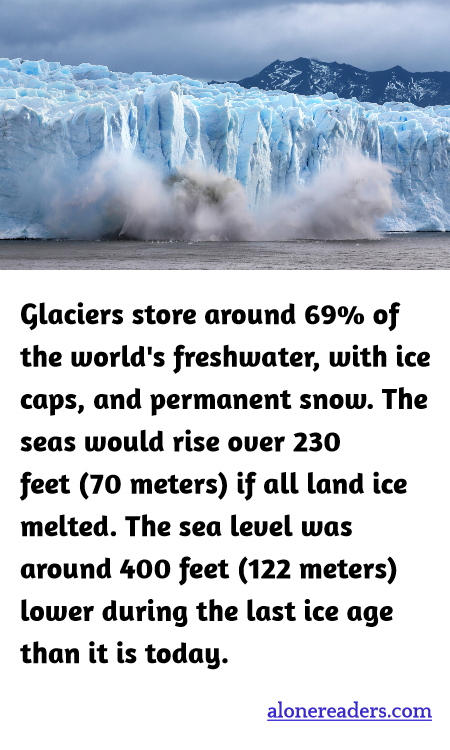
Glaciers, ice caps, and permanent snow represent the largest reservoirs of freshwater on our planet, encompassing approximately 69% of the world's freshwater supplies. These vast icy expanses are critical not only as water sources but also as regulators of global climate and sea levels. The sheer volume of water contained in these frozen reservoirs is staggering when considering the potential impact on sea level rise if they were to melt completely.
Should all the land ice currently on Earth melt, the global sea level would rise by over 230 feet (about 70 meters). This would have profound effects on the world’s geography, submerging many of the coastal cities, low-lying areas, and islands that millions of people call home today. To put this into perspective, during the last Ice Age, which peaked about 20,000 years ago, the sea levels were approximately 400 feet (122 meters) lower than they are at present. The massive ice sheets that covered large parts of the North American and Eurasian continents during this time stored vast quantities of water, which kept sea levels significantly lower until the end of the Ice Age saw the gradual melting and retreat of these ice sheets.
The potential rise in sea levels due to melting glaciers is not just a future risk but is already a current issue. Glaciers are retreating at an accelerating rate globally, influenced heavily by global warming. This process contributes to the gradual but persistent rise in sea levels, presenting an ongoing challenge to global climate resilience and adaptation strategies. As glaciers diminish, they also reduce the availability of freshwater for ecosystems and human use, threatening biodiversity and the water security of communities around the world that depend on glacial meltwater for their water supplies during dry seasons.
The dynamic nature of Earth's glaciers and their critical role in both ecological and human systems underscores the need for sustained efforts in monitoring and combating climate change to preserve these essential natural resources. Each glacier melt not only reflects the increasing temperatures but is also a crucial indicator of the broader environmental changes occurring globally, which are central to the discussions and actions within climate policy and conservation circles.
