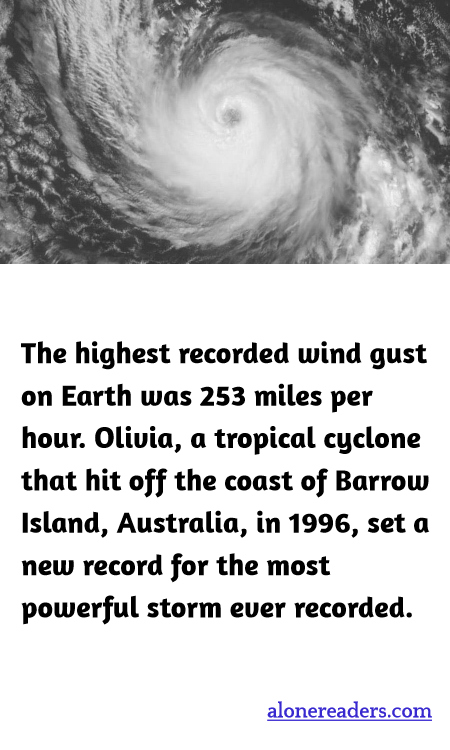
On April 10, 1996, an extraordinary meteorological event was recorded on Barrow Island, Australia, during Tropical Cyclone Olivia, which stormed through the region. This cyclone achieved a monumental feat by setting the record for the highest recorded wind gust on Earth at an astonishing 253 miles per hour. This record-breaking gust surpassed previous records significantly and marked a pivotal moment in the study of tropical cyclones.
Barrow Island's geographical placement in the Indian Ocean makes it susceptible to cyclones, but none prior or since have reached the intensity of Cyclone Olivia. This cyclone not only broke records but also underscored the immense power such natural phenomena can wield, leading to increased interest and research in understanding the dynamics of cyclones. The intensity of the wind during Olivia was so extreme that it pushed the boundaries of what meteorologists thought was possible in natural wind speeds.
The record of 253 mph far exceeded previous records by a considerable margin, highlighting the unique conditions that can occur in cyclone-prone regions. The data collected from Cyclone Olivia has been invaluable in refining models of cyclone behavior and improving forecasting techniques. Understanding these extreme conditions helps meteorological communities around the world better predict and prepare for similar high-intensity events, potentially saving lives and mitigating damage.
The aftermath of Cyclone Olivia also brought to light the importance of robust infrastructure and preparedness in cyclone-prone areas. The record wind speeds observed called for a reevaluation of building codes and disaster preparedness strategies to handle such extreme events. As climate patterns continue to evolve, the record set by Cyclone Olivia remains a reminder of the powerful forces of nature and the ongoing need for rigorous research and preparedness in the face of increasing weather unpredictability.
