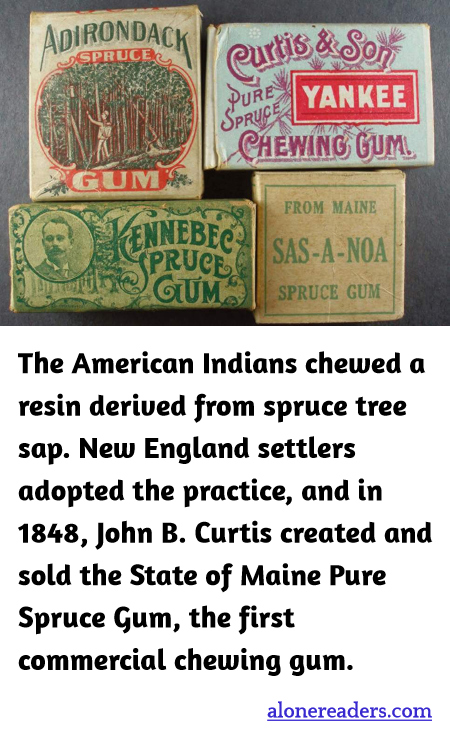
Chewing gum, a popular global pastime today, has its roots deeply embedded in the cultural practices of American Indians. They were initially known to chew a resin extracted from spruce tree sap. This natural resin was not only chewed for enjoyment but also had practical benefits, including cleaning the teeth and freshening the breath. Recognizing the potential of this natural habit, early New England settlers soon adopted this practice, incorporating it into their daily lives.
The commercialization of chewing gum began with John B. Curtis, an enterprising individual from Maine. In 1848, he launched "The State of Maine Pure Spruce Gum," marking the inception of the first commercially produced chewing gum. This product was essentially a refined form of the spruce sap resin, processed into a more palatable and marketable form. Curtis’s pioneering effort laid the foundational stone for the chewing gum industry, which would see numerous transformations over the ensuing decades.
Following Curtis’s initial venture, various innovations and improvements transformed chewing gum into a staple of American culture. By the late 19th and early 20th centuries, gum was being sold in vending machines, and various flavors and types were developed. The innovation did not stop at just spruce sap; other substances like chicle, a natural latex sourced from the sapodilla tree, became prominent bases for gum. This shift was pivotal as it led to the creation of many of the modern forms of chewing gum familiar to us today.
Moreover, gum has seen its role evolve beyond mere oral enjoyment. During World War II, it was included in American soldiers' rations for its practical benefits in stress relief and maintaining hygiene. Today, the global market for chewing gum is vast, with numerous brands offering an array of flavors, types, and benefits, including sugar-free options and gum designed specifically for dental health.
The journey of chewing gum from the simple resin of spruce trees chewed by American Indians to a manufactured, globally consumed product is a fascinating story of cultural adoption, innovation, and market evolution. This humble beginning as a natural byproduct to a multi-billion dollar industry underscores the dynamic interplay between tradition and modernization in the history of everyday products.
