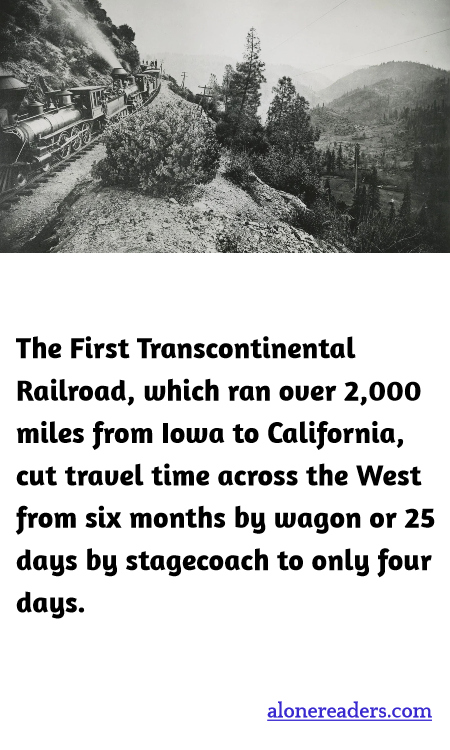
The completion of the First Transcontinental Railroad in 1869 stands as one of the monumental achievements in American engineering and development, profoundly transforming the country's landscape and its economy. Spanning over 2,000 miles, this colossal undertaking connected the Missouri River at Council Bluffs, Iowa, directly to the Pacific port of Oakland, California, effectively bridging the vast American continent with continuous steel rails for the first time in history.
Prior to the railroad, crossing the expansive American West was a perilous journey fraught with dangers and high mortality rates. Typically, it involved a grueling six-month trek by wagon or a 25-day stagecoach trip through harsh and often hostile territories. The establishment of the railroad revolutionized travel by reducing the coast-to-coast journey to a mere four days. This incredible reduction in travel time not only made the West accessible to settlers, miners, and entrepreneurs but also facilitated the swift movement of goods and mail, bolstering the national economy extensively.
The impact of the railroad stretched beyond travel and commerce. It marked a pivotal moment in the United States’ rise as an industrial power. The creation of the Transcontinental Railroad was driven by the monumental labor force composed predominantly of immigrant workers, including thousands from China and Ireland, who faced harsh conditions and grueling labor to lay down the tracks that would unify the nation. Their efforts are a significant but often overlooked aspect of the railroad's history, reflecting both the aspirations and the hardships of the American experience.
Employing a combination of public funds and substantial private investment, primarily from the Central Pacific and the Union Pacific Railroad Companies, the ambitious project encountered numerous obstacles. Geographic and logistical challenges, financial controversies, and labor disputes were rife throughout its construction. Nevertheless, the completion of the railroad culminated in the famous "Golden Spike" ceremony at Promontory, Utah, where the final link between the rails was symbolized by driving a golden spike into the railroad ties, connecting East with West in a continuous metal band.
The Transcontinental Railroad did not just remodel American commerce and settlement; it also had profound effects on the indigenous populations whose lands the railroad cut through. The route facilitated increased migration of settlers into native territories, leading to displacement, loss of native lands, and significant alterations in the way of life for many indigenous communities.
In essence, the First Transcontinental Railroad was pivotal in knitting together a divided nation in the post-Civil War era, catalyzing economic growth, and reshaping the American landscape and societal structure. It remains a testament to human endeavor and a critical step toward the creation of the modern United States.
