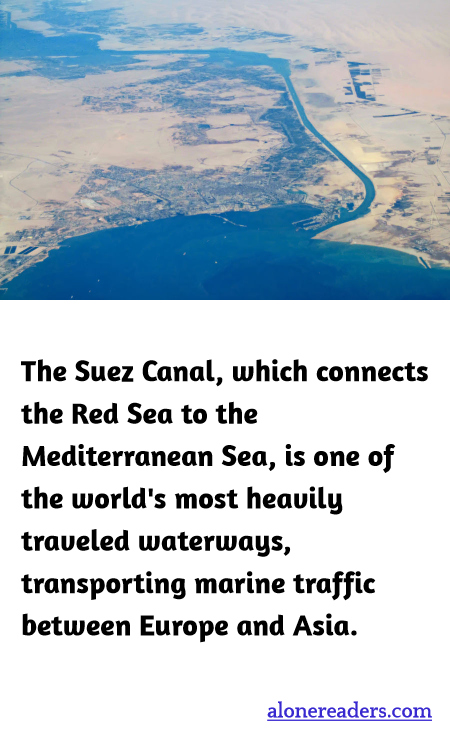
The Suez Canal, stretching 120 miles from the Mediterranean Sea to the Red Sea, represents one of the world's most critical maritime routes. Since its completion by the French engineer Ferdinand de Lesseps in 1869, the canal has not only been a pivotal axis for global trade but also a strategic military point during conflicts like the Suez Crisis of 1956. Annually, the Suez Canal sees the passage of about 12% of global trade, highlighting its tremendous significance in international economics.
The canal offers a direct route for shipping between Europe and Asia, significantly reducing the journey compared to the alternative route around the Cape of Good Hope. This shortened transit time results in considerable fuel savings and lower costs, making products more affordable worldwide. The Suez Canal's importance is further magnified by its usage for the transport of petroleum and liquefied natural gas, originating predominantly from the Middle East to Europe and the USA.
However, the canal's strategic importance comes with vulnerabilities. It has been a focal point for geopolitical strife, as seen during the Suez Crisis when Egypt nationalized the canal, leading to military intervention by Britain, France, and Israel. More recently, disruptions like the 2021 blockage caused by the Ever Given container ship showcased how delicate the operation of such a critical waterway can be. The incident not only delayed hundreds of ships but also underscored the potential economic vulnerabilities, with billions in trade held up daily.
The management and operation of the Suez Canal also shed light on broader themes regarding international cooperation and economic competition. Countries reliant on this route for their energy supplies or maritime commerce regard canal stability as paramount, often prompting international dialogues aimed at ensuring its uninterrupted functionality. Additionally, the income derived from the canal's transit tolls remains vital for Egypt's economy, underpinning significant public sector investments and economic reforms.
In conclusion, the Suez Canal's role as an artery of global trade is undisputed. Its ability to influence shipping costs, determine trade routes, and impact global economic stability remains unchallenged, making its efficient management crucial for a large swath of the world's economy. As global trade patterns evolve and new maritime challenges arise, the significance of the Suez Canal will likely continue to be a critical focus of global economic strategies and international diplomacy.
