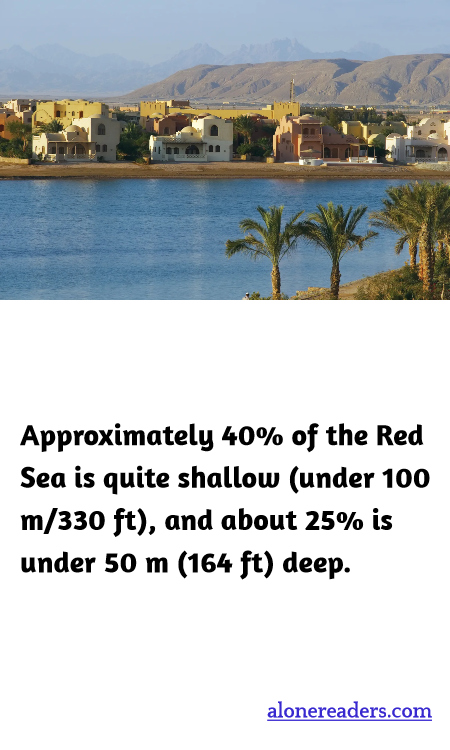
The Red Sea, a vital waterway bordered by Africa and the Arabian Peninsula, is renowned not only for its strategic importance but also for its unique physical characteristics. One of the most striking features is that approximately 40% of the Red Sea is quite shallow, with depths less than 100 meters (330 feet), and about 25% of it is shallower than 50 meters (164 feet). This shallow nature impacts both the ecological dynamics and the navigational considerations of the region.
The shallow areas of the Red Sea play a crucial role in the health of its marine ecosystems. These areas are typically warmer, which influences the types of marine life that can thrive. The sunlit waters richly nourish coral reefs, fostering a vibrant biodiversity. Coral reefs are crucial because they act as breeding and feeding grounds for many species of fish and other marine life. The diversity and productivity of these ecosystems make the Red Sea a hotspot for divers and biologists alike, keen on exploring its underwater splendors.
However, the shallow depth of the Red Sea also presents challenges, particularly for navigation. The risk of ships running aground is higher in these shallow waters, which requires careful route planning and navigation to avoid accidents. Moreover, the environmental impact of such incidents could be catastrophic, given the fragile nature of the marine ecosystems in the Red Sea. Oil spills, for example, could damage the coral reefs and lead to long-term ecological consequences.
Furthermore, the strategic location of the Red Sea, connecting to the Suez Canal, one of the world’s most important maritime passages, adds to the complexity. The canal is a crucial link for the transport of oil and commercial goods between Europe, Asia, and Africa, making the safety of navigation in the Red Sea even more critical. The shallow waters necessitate strict regulatory measures and the implementation of advanced technological aids to ensure safe maritime transit.
In conclusion, the Red Sea's significant portion of shallow water is both a blessing and a challenge. While it supports a rich array of marine life and attracts marine researchers and diving enthusiasts from across the globe, it also requires meticulous navigational practices to safeguard marine biodiversity and ensure the smooth flow of international maritime traffic. The dual nature of the Red Sea’s shallow waters serves as a reminder of the delicate balance between utilizing and conserving our natural resources.
