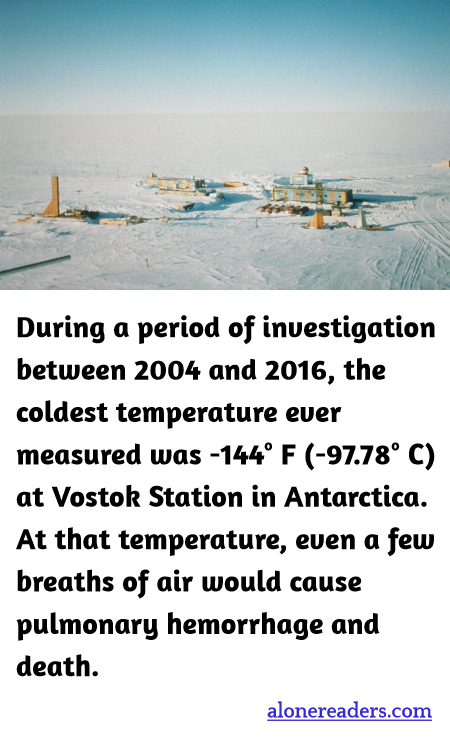
Antarctica, known for its icy landscapes and extreme conditions, solidifies its reputation with record-breaking temperatures that stretch the limits of human survivability. During an extensive research period from 2004 to 2016, scientists recorded the coldest temperature on Earth at Vostok Station, where thermometers plunged to an astonishing -144°F (-97.78°C). This temperature is not only a statistical data point but a stark reminder of the perilous conditions that can exist on our planet.
At these extreme temperatures, the very air becomes a hazard. The cold is so severe that exposure to such an environment, even briefly, would lead to immediate and life-threatening health consequences. Breathing in air that cold would freeze the water vapor in the lungs, leading to pulmonary hemorrhage. This condition, where the lung's delicate membranes are damaged, causes bleeding within the lungs, and can rapidly be fatal if immediate medical intervention is not available.
The implications of such temperatures extend beyond the immediate physical dangers. The environment at Vostok Station and similar locations poses significant challenges for scientific exploration and habitation. Specialized equipment and protocols are essential to safely conduct research in such extremes, which provides valuable data about Earth's climate system and pushes the boundaries of technology and human endurance. Moreover, understanding these extreme conditions also prepares humanity for exploration of other planets, whose hostile environments may mimic some of the harsh conditions found in remote areas of our own world.
Through the lens of these chilling figures, Vostok Station not only highlights the physical limits of the human body but also epitomizes our quest for knowledge, demonstrating both our vulnerability and our ingenuity in the face of nature’s extremes. The findings at Vostok serve as a benchmark for extremes on Earth and offer invaluable insights that can be applied to both terrestrial and extraterrestrial scientific fields.
