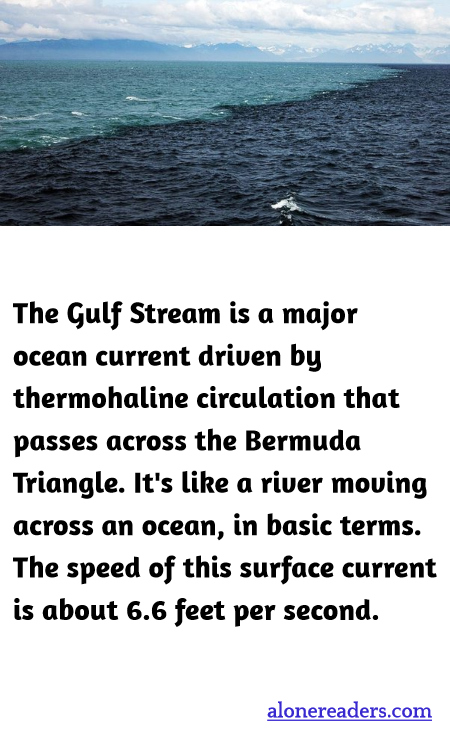
The Gulf Stream, a powerful, warm, and swift Atlantic Ocean current, plays a pivotal role in shaping the climate and marine environment of the eastern coast of the United States and Western Europe. Originating at the tip of Florida, it flows northward along the eastern seaboard of the United States, extending into the North Atlantic. This massive ocean current is part of a complex global system known as thermohaline circulation, which is driven by global density gradients created by surface heat and freshwater fluxes.
The impact of the Gulf Stream is profound as it influences weather patterns, marine biodiversity, and even the fishing industry in its path. For instance, it warms the British Isles and Northwestern Europe, contributing to milder winters compared to other regions at similar latitudes. It also enhances the productivity of the Atlantic Ocean by transporting warm tropical waters to higher latitudes, facilitating nutrient-rich upwellings which support an abundance of marine life.
Interestingly, the Gulf Stream also crosses the mysterious Bermuda Triangle, an area roughly bounded by Miami, Bermuda, and Puerto Rico. This region has been the subject of various myths and legends, primarily due to the unexplained disappearances of ships and aircraft. The characteristics of the Gulf Stream, with its strong flow at about 6.6 feet per second, might explain some navigational challenges within the Bermuda Triangle. The powerful current can quickly erase any evidence of mishaps by carrying debris or sinking vessels deep into the Atlantic.
Furthermore, the thermal properties of the Gulf Stream contribute to complex local weather patterns, which can potentially lead to sudden storms, further complicating navigation and increasing the risk within the Bermuda Triangle area. The interplay between the warm Gulf Stream and the cooler waters of the Northern Atlantic can also fuel intense fog formations, creating treacherous conditions for maritime and air travel.
While the Gulf Stream’s influence on the Bermuda Triangle adds a layer of natural complexity to the area, it remains a critical current in the Atlantic, essential for understanding both regional and global climatic conditions. Its study provides valuable insights into climate change phenomena, including sea-level rise and shifting weather patterns, which are critical for developing strategies to mitigate and adapt to our changing planet. Thus, the Gulf Stream's role extends far beyond just its immediate environmental effects; it is a crucial component of the Earth's climatic engine, influencing conditions and life far beyond its paths.
