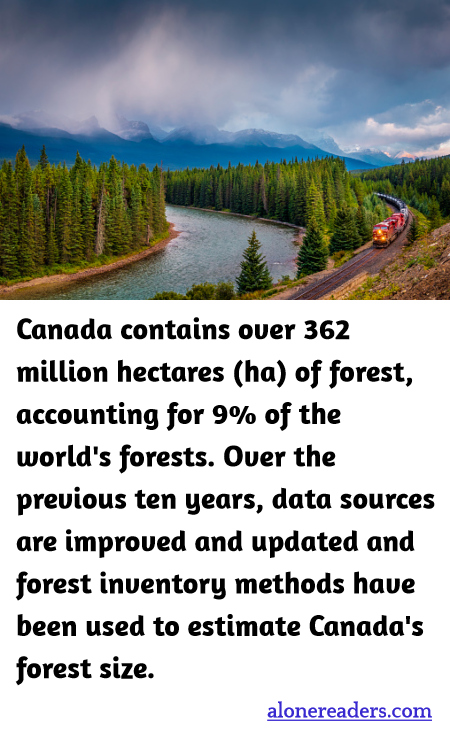
Canada’s vast forests are not only a cornerstone of its natural heritage but also play a critical role on the global environmental stage. Covering over 362 million hectares, these forests represent 9% of the entire world's forest cover, making Canada one of the most forest-rich countries in the world. This extensive area is a critical habitat for wildlife, a major source of economic activities through logging and recreation, and a significant absorber of carbon dioxide, thus contributing to the fight against global climate change.
Over the past decade, there has been a significant evolution in the way Canada’s forest size is estimated, primarily due to advancements in data sources and forest inventory methods. Traditional ground-based surveys have increasingly been supplemented and sometimes replaced by remote sensing technology such as satellite imagery and aerial photography. These technologies offer a more comprehensive and frequent assessment of forest health, extent, and composition. They are invaluable in tracking changes due to natural disturbances like fires and infestations or human activities such as logging and land development.
Moreover, improved data analytics and geographic information systems (GIS) are being employed to handle the vast amount of data collected, helping to improve the accuracy of forest mapping. These advancements allow for better management practices by providing more reliable information on which to base decisions regarding sustainable forestry, conservation efforts, and climate change mitigation strategies.
Canada’s commitment to maintaining its forest resources is evident not only in its approach to technology and data but also in its policies and international environmental commitments. By continually updating and refining the methods by which the forests are monitored and managed, Canada is setting a standard in forest conservation and sustainability, ensuring these resources continue to thrive for generations to come. This proactive approach is vital as the pressures of climate change and industrial demand continue to challenge global forest resources.
