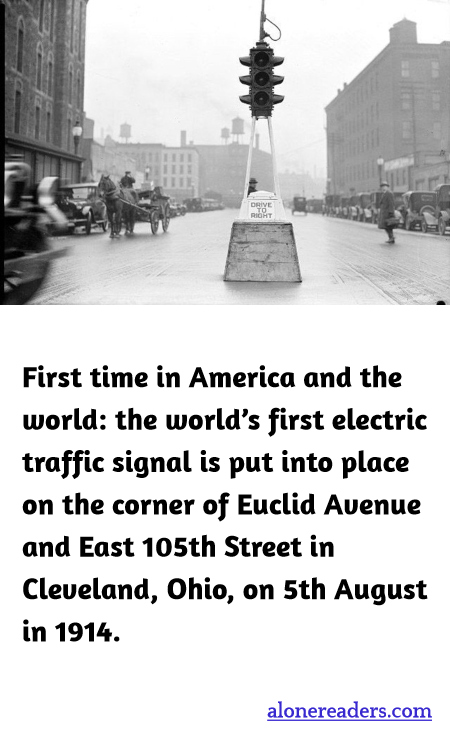
On August 5, 1914, a historical milestone in transportation technology was achieved in Cleveland, Ohio, marking a significant turning point in both American and global urban development. The world's first electric traffic signal was installed at the bustling intersection of Euclid Avenue and East 105th Street. This inaugural device laid the foundational stone for the modern traffic management systems that we are accustomed to today.
Before the introduction of the electric traffic signal, policemen would often direct traffic at busy intersections during most of the day. This method was not only labor-intensive but also less effective at preventing traffic jams and accidents. The genesis of electric traffic signals revolutionized how cities managed the increasing number of automobiles on their roads.
The original traffic signal system consisted of four pairs of red and green lights that were wired to a manually controlled switch located inside a control booth beside the road. This control system allowed the police officer on duty to change the signals, thereby directing traffic more safely and efficiently. Notably, the system lacked the yellow light that is now standard in traffic signals and serves as a warning to stop.
The introduction of the electric traffic signal at such a pivotal time was crucial. The early 20th century saw a boom in automobile production and subsequently, an increase in vehicular traffic. Roadways were primarily designed for slow-moving horse-drawn carriages, and the new, faster-moving cars created a recipe for chaos on city streets. The new traffic management tool at Euclid Avenue and East 105th Street not only improved automobile flow but also enhanced pedestrian safety in an era of rapid technological advancements and increasing car speeds.
As the prototype of today’s traffic light system, the 1914 electric traffic signal introduced in Cleveland soon inspired other cities across the United States and around the world to adopt similar technologies. The system has evolved over the decades, with the inclusion of features such as timers, pedestrian signals, and advanced sensor systems that help manage traffic flow more efficiently and adaptively.
The deployment of the first electric traffic signal was more than just an improvement in road safety; it was a pivotal innovation that transformed urban living. It is a vivid illustration of how technology responds to and influences societal needs and challenges, paving the way for further advancements in transportation infrastructure and urban planning that continue to shape our cities today.
