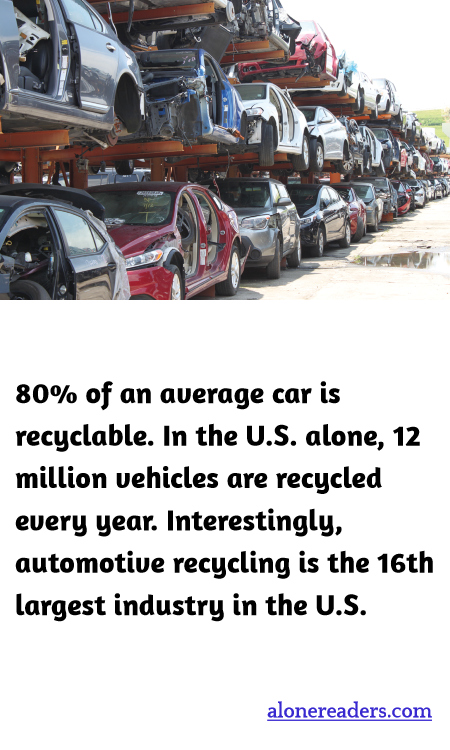
Automotive recycling is not only a crucial aspect of the automotive industry but also a significant contributor to environmental conservation efforts. Surprisingly, about 80% of an average car is recyclable, including the metal, plastic, tires, glass, and fabrics. This high recyclability means that when a car reaches the end of its life, most of its components can be reused, remanufactured, or recycled, reducing the need for new raw materials and minimizing waste.
In the United States, the scale of automotive recycling is immense, with about 12 million vehicles recycled every year. This makes automotive recycling the 16th largest industry in the country, showcasing its importance not only from an environmental standpoint but also economically. The industry employs thousands and generates considerable revenue while significantly reducing the environmental impact associated with manufacturing new vehicles and disposing of old ones.
The process of recycling a car involves several steps. Initially, all hazardous materials such as oil, fuel, and coolants are removed and properly disposed of or treated. Subsequently, the car is dismantled, and usable parts are sold for reuse in other vehicles. Parts that are not reusable are destroyed and sent to recycling facilities where they are processed into raw materials like steel, aluminum, and plastic. These materials are then used in the production of new products, including new vehicle components, which in turn reduces the mining and processing of new materials and lowers the carbon footprint associated with these processes.
The benefits of automotive recycling are manifold. It conservatively saves an estimated 85 million barrels of oil annually, which would have been used in the manufacturing of new or replacement parts. Furthermore, recycling steel uses about 74% less energy than producing new steel from raw ore, greatly reducing energy consumption and pollution.
However, despite these benefits, challenges remain. Not all components of a car are equally recyclable, and advancements in vehicle technology, such as the increase in electric vehicles, pose new recycling challenges and opportunities. Continuous improvement and innovation in recycling technologies and practices will be critical to enhancing the efficiency and effectiveness of automotive recycling.
Overall, automotive recycling is a vital industry that offers both environmental and economic benefits. It exemplifies a successful model of the circular economy, where products are reused and repurposed to the greatest extent possible, reducing waste and the demand for raw resources. As consumer awareness increases and technology advances, the industry is poised to continue growing, promising even greater contributions to sustainable development in the future.
